| OCR Text |
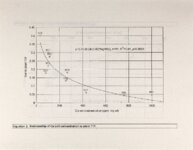
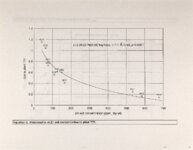
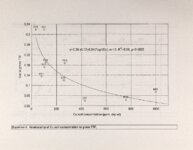
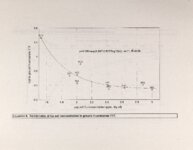
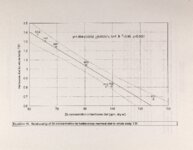
Show - Ecological Risk Assessment Northern Oquirrh Mountains Peromyscus or assumed to be one, whichever was higher, but AO data exist to refine factors for these trophic levels. were based on The measurements of CoC concentrations in invertebrates and small mammals illustrated the enormous uncertainty involved with making risk estimates solely from extrapolations of Based on the data from the 11 sampling sites, soil concentrations significantly correlated with concentrations in invertebrates or whole soil concentration data. of CoC were not bodies of Peromyscus, except for Pb (soil VS. both), Cu (soil VS. invertebrates only), and Cd (soil VS. Peromyscus only). In the four cases where soil concentrations were significantly correlated with invertebrate or Peromyscus concentrations, this was due primarily to the wide ranges in concentrations in soil (Le., greater than an order of magnitude among the sampling sites) where the correlation was driven by two or three high values. For example, the most significant correlation observed was between soil concentrations of Cd and Cd in 0.97, P < 0.05). However, removing the Pine Canyon sites (with Peromyscus (r soil concentrations) from the analysis, the correlation between soil and significantly higher not was Peromyscus significant (r -0.25, p> 0.05). Consequently, CoC concentrations in = = animals seems to be either unpredictable from soil concentrations or only crudely predictable for some CoCo 3.3 Interpretation of Ecological Significance The lower canyons in the northern Oquirrh Mountains are characterized as relatively simple ecosystems due to past effects from CoC contamination from smelting activity and from present day effects from grazing by domestic and wild ungulates. Early remediation activities in the 1970s have reestablished vegetation and reduced the erosion of soil by wind and rain. Plant species diversity has increased significantly in the past few decades in the canyons nearest the Garfield and International Smelters, but the diversity and abundance of wildlife remains relatively low as plant communities recover from past CoC exposure that resulted in the loss of soil by erosion. Recovery in the lower canyons is slowed by heavy grazing by sheep and cattle in Coon and Pine Canyons and Little Valley Wash, and by deer and elk in all canyons. Re-vegetation efforts have been successful in some areas, in spite of pressure by deer and elk. However, the recovery of plant communities in the lower canyons would be accelerated if grazing pressure were less. Heavy grazing in the lower canyons results in very limited habitat for many groups of invertebrates and vertebrates. The numbers and diversity of small mammals captured on each sampling site seem more related to the condition of the habitat in the area than to the current concentrations of CoC in diets or other environment media. All sampling sites showed evidence of heavy grazing pressure from domestic and wild ungulates. Much of the vegetation was closely cropped by large herbivores, with only Kessler Canyon, and to a lesser extent Black Rock Canyon, showing any standing dead vegetation that is important cover for small mammals. Mule deer and elk were regularly observed on or near sampling sites. Their night-time activity on the sampling sites was evidenced by their pul,ling and/or chewing of the plastic marker flags used to identify trap stations. The 1995 field work focused on quantifying the CoC concentrations in, and observed effects to, invertebrate and vertebrate (represented by small mammals) groups. Although 84 ecological planning and toxicology, inc. 1 |