| OCR Text |
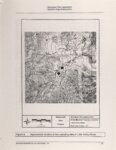
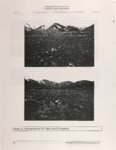
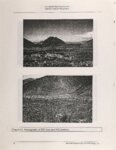
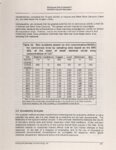
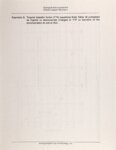
Show Ecological Risk Assessment Northern Oquirrh Mountains Small mammals--One Vlctor" mouse-size snap trap was placed at each of the 100 trap Twenty additional traps were placed at established of small mammal activity. Traps were baited indication that showed the greatest grid points butter the on with peanut late in Monday through Thursday of each week and checked day locations in each grid for four days. beginning approximately 0630-0700 the next morning. All trapped mammals were placed in plastic bags, labeled with a numbered bar code label, recorded in the field note book, and placed in a cooler on ice. After collecting mammals, samples were transported to a laboratory for necropsy. Surface-dwelling invertebrates--Pitfall traps (quart-size plastic containers measuring 10 cm in diameter and 15 cm deep) were placed flush with the soil surface in hand-dug holes to capture surface-dwelling invertebrates for CoC analysis. The soil removed from each hole was examined for soil dwelling invertebrates (e.g., earthworms, insect larvae), but very few Pitfall traps were placed at each of nine locations arranged in a 3 x 3 grid were found. within the small mammal trapping grid (Figure 16). One or two traps were placed at each location. Invertebrates were collected from all trap locations in the morning (Tuesday through Friday of each week) and placed in a plastic bag, labeled with a numbered bar code, recorded in the field note book, and placed in a cooler on ice. On each sampling site, all surface-dwelling invertebrates collected from all pitfall traps during the four days were pooled into a combined sample for identification and CoC analysis. Identification was verified using The Common Insects of North America (Swan and Papp 1972). Foliar invertebrates-Sweepnets were used to collect foliar invertebrates for identification and CoC analysis. Sweepnetting was done at midday by walking throughout each site sweeping the net through available vegetation. The invertebrates collected in sampling the net were transferred to a plastic bag labeled with a numbered bar code label, recorded in the field note book, and placed in a cooler on ice. In the laboratory, foliar invertebrates were separated from vegetation and other extraneous material, identified to order, and separated into herbivores and carnivores. Aerial invertebrates-A battery-operated night-flying insects. blacklight flying insect trap was used to capture The insect trap photosensor automatically turned on the blacklight at placed in the center of each sampling site for one night, weather permitting. Insects were collected each morning from the nylon mesh bag attached to the funnel below the blacklight, transferred to a plastic bag labeled with a numbered bar code label, recorded in the field note book, and placed in a cooler on ice. dusk. The trap was Soil-- The 1994 Screening Level EcoRA found that soil concentrations varied less among samples at a sampling location than between locations. In 1995, a composite soil sample sampling site by combining equivalent 15 cm deep cross-sections of soil collected using a plastic trowel from each of the nine pitfall trap locations. This provided a characterization of the mean concentration at each sampling site. was collected from each Plants-Vegetation samples of the six most common taxa on each sampling site were by compositing samples for each species from the nine pitfall trap locations. for each plant species were collected in series (i.e., collect one species then Samples another) to avoid cross contamination. Collecting tools were cleaned between plant species. A modified Releve assessment was conducted on each of the sampling sites. collected ecological planning and toxicology, inc. 33 |