| OCR Text |
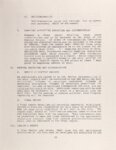
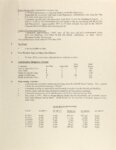
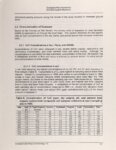
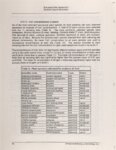
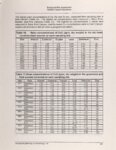
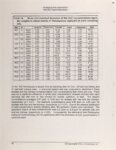
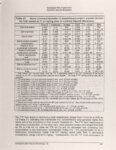
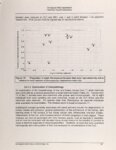
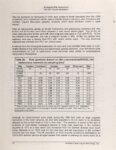
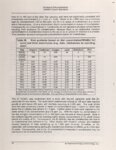
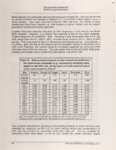
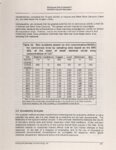
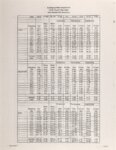
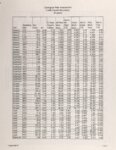
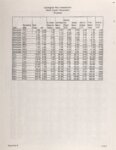
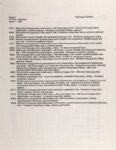
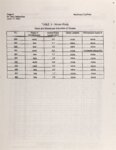
Show Ecological Risk Assessment Northern Oquirrh Mountains pinon mouse. Overall, Peromyscus represented 96% Canyon had the greatest diversity with four species. II Pine captures. Number of small mammals captured from each sampling site. Table 22. II of all mammal Sampling Microtus site mon tan us CC1 0 CC2 LV1 Perognathus Peromyscus Reithro don tomys Tamias mega/otis minimus Total sp. parvus 5 0 0 0 5 1 12 0 0 0 13 0 10 0 0 0 10 II LV2 1 10 0 0 0 11 KC1 0 88 0 0 0 88 KC2 0 113 0 0 0 113 BR1 0 12 0 1 0 13 BR2 0 11 2 1 0 14 PC1 0 30 1 0 1 32 PC2 3 29 0 0 0 32 PC3 1 36 1 0 0 38 Total 6 356 4 2 1 369 Of the 369 total undetermined sex captures, because " II 182 were females, 168 were males, and 19 were of they had been partially consumed by scavengers prior to collection. Body weights of Peromyscus were significantly different among the sampling sites (F=3.89, df=10, p<0.0001) because of differences in the proportion of juveniles to adults. In BR1 and LV1 the proportion of juveniles was higher than in other sites, resulting in lower mean body weights. Body weights in BR 1 were significantly lower than in CC2 and all the Pine Canyon sites, while body weights in LV1 were significantly lower than in CC2. 2.4. 1.2 Reproductive activity All females were examined to determine if they were pregnant at the time of capture or if placental scars were present indicative of previous pregnancies. Fifty of 175 (28.6%) of Peromyscus females were pregnant, and 45 (25.7%) contained placental scars (one had both scars and new embryos). Among Peromyscus females with embryos and placental scars, the mean number (± standard deviation) of embryos and placental scars was 4.4 ± 0.9 and 4.5 ± 1.1, respectively. The median number of both embryos and scars in from all sites was four. Peromyscus sampling Overall, 53.4% of the Peromyscus captured were reproductively .active. These percentages were highly variable among sites, ranging from 0% in BR1 (n=8) and CC1 (n=3) to 100% in CC2 (n=4), primarily due to small sample sizes from some sampling sites (Table 23). Although none of the adult females in BR 1 were reproductively active, several juvenile Peromyscus weighting between 7 and 12 g were captured below the weight expected for dispersing subadults. These juveniles were presumed to have been recently born at or near the site. All reproductively active female Peromyscus at all sites weighed 18 g, except one weighing 16 g (Figure 18). ecological planning and toxicology, inc. 55 |