| OCR Text |
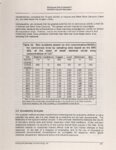
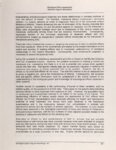
Show • Ecological Risk Assessment Northern Oquirrh Mountains Appendix 2 The character 1994 Screem: and animal toxicity of the chemicals of concern (CoC) were reviewed in the vel EcoRA (ep and t 1995). This appendix presents that review with a few modifications t the NOAELs and/or LOAELs based Screening Level EcoRA. on additional reports reviewed since the 1. Characteristics of Chemicals of Concern tentatively identified CoC are naturally occurring substances found in varying concentrations in different soils, underlying parent material, and ore bodies. The surface materials in the Core Project Area contain CoC as a result of weathering of parent material, leaching and other soil geomorphologic processes. In areas receiving deposition of smelter emissions, or wind blown deposits from tailings or waste rocks, additional quantities of CoC may be present; the static concentration of CoC is dependent on the net balance of deposition, erosion, and leaching. Evaluating risk from CoC related to mining activities requires an All of the understanding of expected background concentrations. Variations in parent material, soil types, and land uses other than mining that may have affected soil CoC concentrations limit efforts to define background concentrations. Two approaches for establishing background concentrations are presented: 1) broad based surnrnarles of crustal abundance with a focus toward concentrations in the western United States; and 2} historical studies of the Oquirrh Mountains including exploration data and plume dispersion measurements. The use of a nearby reference site, such as the Stansbury Mountains, was considered inappropriate as it is highly likely that the geology of the Oquirrh Mountains is different from the surrounding area. Large deposits of copper, lead, and gold have been found and mined in the Oquirrh Mountains while mining activity has occurred on a much smaller scale, if at all, in the Stansbury Mountains. This suggests that rich ore bodies, and the additional generally accompany the ores, do not exist in the Stansbury Mountains, so background levels of the CoC in soils developed from the parent rocks would differ significantly from the Core Project Area. elements that Ecologically, the mountains emerging from the Great Basin desert are very different from the Wasatch and other mountains of the Colorado Plateau as well as from each other. They can be considered as islands for many species of plants and animals whose dispersal strategy is such they are unable to cross the intervening deserts. In addition, precipitation becomes noticably less as one moves from the east to the west across the Great Basin. This results in a Significantly different ecological community among the mountain areas (Harper et al., 1994). When Dr. Jim Brown was at University of Utah (he is now at the University of New Mexico), he and his students applied theories of island biogeograhy to attempt to explain species differences among the various mountains (e.g., Middleton, 1990). While the theories could not explain all the variablitiy, they did describe and explain differences in flora and fauna of the various mountain ranges in the Great Basin. Taye (1983) also invoked principles of island biogeography to explain vagaries of plant distribuiton among mountain ranges. The Wasatch Mountains to the east are part of the Rocky Mountains and have a very different geology and ecology (Harper et a/., 1994). that Chemicals of Concern are listed below. The listing is followed by a discussion of CoC levels in the US compared to those in the Core Project Area. 1.1 Arsenic (As) Arsenic occurs in most rock types and has high affinity to clays, hydroxides, and organic matter. Background concentrations in U. S. soils range from <0.1 to 93 ppm. Average soil As concentrations in the U.S. range from 5.1 to 8.8 ppm (Kabata-Pendias & Pendias, 1992). ecological planning and toxicology, inc. 1 |