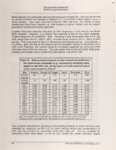
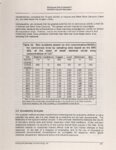
| OCR Text |
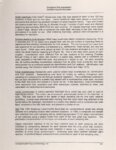
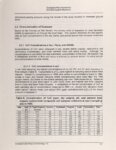
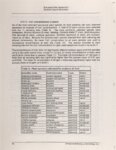
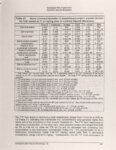
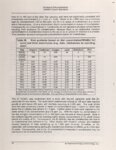
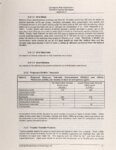
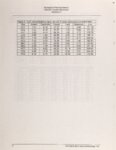
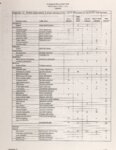
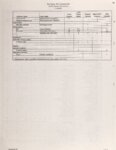
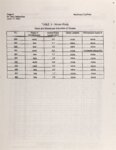
Show - Ecological Risk Assessment North Oquirrh Mountains Appendix 2 showed no changes in the above-mentioned parameters as compared to a reference site. Therefore, a NOAEL for insectivorous birds could be set at 94 ppm, with no data available for determining a LOAEL. 1 Herbivorous birds, as typified by mallards, also have a NOAEL of at least 100 or Mallards (Anas platyrhynchos) fed diets containing 25 ppm Pb as Pb nitrate or 100 ppm Pb metallic Pb for 7 to 12 weeks showed no adverse effects on eggshell thickness or clinical signs pJ!m. + (Hudson et a/., 1984; Haegele et a/., 1974; Di Guilio and Scanlon, 1984). Lead poisoning from ingestion of shot has been reported in various raptor species, particularly in bald eagles (Langelier et a/., 1991). Chronic Pb poisoning, however, has been studied only in kestrels (Falco sparverius) experimentally fed Pb-contaminated food. Kestrels were fed mallards (n=3) containing 16 to 87 ppm Pb for 60 days without exhibiting signs of Pb poisoning (Stendell, 1980). Similarly, Franson et a/. (1983) and Pattee (1984) found no effects in kestrels fed 10 or 50 ppm metallic Pb for up to six months (n=16 pairs per group) and Custer et a/. (1984) achieved the same results by feeding kestrels cockerels containing 0.5, 120, 212, and 448 ppm of Pb for 60 day (n=10 per treatment). Therefore, a NOAEL for avian carnivores should be set at 448 ppm. 2.7.1.3 Wild Mammals There are no reports of Pb toxicosis in wild mammals, although several studies have demonstrated elevated tissue Pb concentrations in small mammals living near smelters or Clark (1979) examined Pb concentrations in ingesta and carcasses of rodents roadsides. (Microtus pennsylvanicus, Peromyscus leucopus), shrews (Blarina brevicauda), and bats (Eptesicus fuscus, Myotis lucifugus) trapped near a major highway. Lead concentrations in ingesta ranged from 1 to 9.4 ppm in the rodents, from 1.5 to 240 ppm in the shrews, and from 3.8 to 26 ppm in the bats. There were no gross abnormalities observed in any of the animals. (1987) also found significantly higher Pb contents in shrews than in rodents collected Scanlon alongside roads. Haschek et a/. (1979) reported histological lesions in kidneys of meadow and pine voles collected from orchards treated with Pb arsenate. Soil Pb concentrations ranged from 1,342 ppm to 6,326 ppm but no information was provided on Pb concentrations in ingesta. The ingesta Pb concentrations for these wild herbivorous mammals (10 ppm for rodents) is below the NOAEL of 30 ppm observed in other mammalian species (see discussion in Section 4.1.2.8.1.1 The insectivorous shrews, however, provide a NOAEL for this of domestic animals). animal classification of 250 ppm, with no data to suggest a plausible LOAEL. 2.7.1.4 Larsen et a/. Invertebrates (1994) studied the bioaccumulation of metals contained in sewage sludge on Spiders were found alive in the two plots ground and web-weaving spiders living in an old-field. containing 70 ppm Pb in soil. Although no quantification of numbers of spiders per plot was done, it appears that spiders can survive at this concentration of soil Pb. Likewise, Ma et a/. (1990) found live earthworms in soil containing up to 430 ppm Pb and Beyer and Stafford (1993) found live worms in soils up to 550 ppm Pb. Therefore, a NOAEL for invertebrates can be set at 550 ppm Pb in soil, with no information from which a LOAEL can be determined. 2.7.2 Table 9. 16 Proposed Wildlife Threshold Proposed Maximum Tolerable Concentrations (NOAEL) and Effects Thresholds (LOAEL) for Lead in Feed for Wild Animals (ppm d.w.). ecological planning and toxicology, inc. , .' |