| OCR Text |
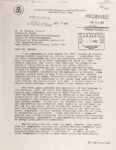
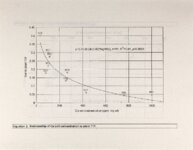
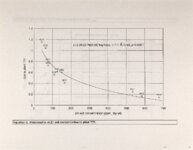
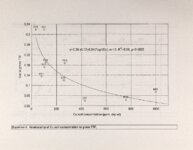
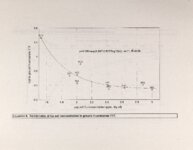
Show En.:. .; ; ; ... To: cc: Subject: 06/28/2000 01 :21 PM usepa@att.net Bruce Zander/EPR/R8/USEPA/US@EPA, Dave Moon/EPR/R8/USEPA/US@EPA, Nat Miullo/EPR/R8/USEPA/US@EPA, Curt Mccormick/P2/R8/USEPA/US@EPA, Eva Hoffman/EPR/R8/USEPA/US@EPA, Dale Hoff/EPR/R8/USEPA/US@EPA, Keith Sappington/DC/USEPA/US@EPA, Peggy Livingston/RC/R8/USEPA/US@EPA Re: Kennecott Qill Curt: Below are some answers to your was questions. As follow-up to my 6/21 e-mail, I've also provided some additional information which hopefully will help you with your preparation of comments on the draft permit. Need for a was for selenium for the GSL. As indicated in my earlier e-mail, I believe the State has essentially developed a was for selenium for the GSL (or rather, Kennecott has developed a recommendation that the State agrees with). That is the 27 ug/l value. The issue is whether or not that's the "correct" value for the GSL. As discussed below, questions about the appropriateness of the 27 ug/I value are related to the dietary and mean bird egg selenium thresholds selected and/or developed by Kennecott and the data supporting the regression-based equation used to relate those values to waterborne selenium. Resolving these issues may require additional laboratory studies and site evaluations (on the other hand, the needed information may be in place, and it's more a matter of reaching agreement on interpretation). You suggest we look for funding to do this. It could be expensive, and any funding we might find likely would be more of a contribution to a larger effort. As you point out, design of any needed additional work should be a team effort, including FWS, Kennecott, the State and EPA. Funding implementation of a study plan that might come from such a group will likely also have to be a team effort. As mentioned in my earlier e-mail, I'm not optimistic about the prospect of EPA, alone, developing and promulgating a selenium criterion for the GSL. Nevertheless, we have authority to do so, and if we were to conclude the 27 ug/I value was inadequate and we could not reach agreement with the parties on an alternative, protective value, EPA has the authority to derive and promulgate a federal standard. Hopefully, a team effort will be able to resolve the issues in dispute and make federal promulgation unnecessary (as explained below, a commitment to federal promulgation will require concurrence from Has). Mixing zone restriction. As indicated in my earlier e-mail, the State allows a 200 ft mixing zone for lakes. They can, at their discretion, reduce or eliminate a mixing zone based on a bioaccumulation concern. It's generally a State call. As I understand it, Kennecott has argued that the mixing zone is appropriate because the exposure risk in the zone area is small (not ideal habitat in the area and limited feeding by birds). It's my understanding that the FWS disagrees and also has a larger concern about the increased loading a mixing zone will allow. There are certainly good arguments for limiting mixing zones for persistent substances that bioaccumulate to the extent that selenium does, and I believe the State did reduce the allowable size for the Kennecott discharge. The State could agree to further limit or forbid a mixing zone if convincing arguments can be made. If there is a technical workgroup formed, this should be one of the issues identified for re-examination and resolution. I believe you have the November 1 2, 1 999 Region 9 letter in which that Region objected to allowance of a |