| OCR Text |
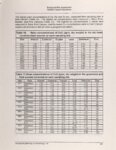
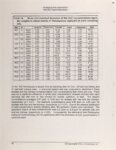
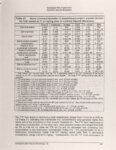
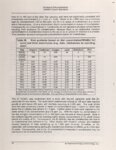
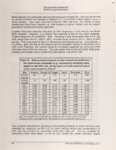
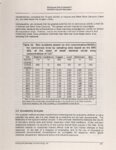
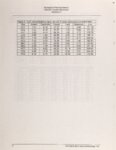
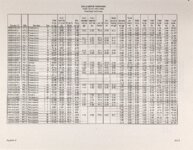
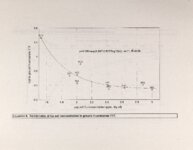
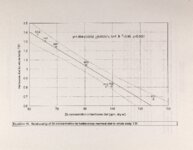
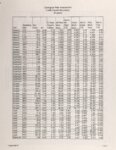
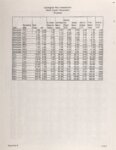
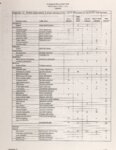
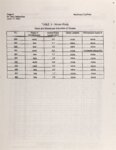
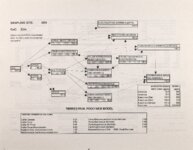
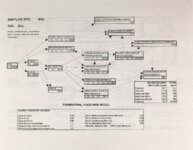
Show Ecological Risk Assessment N" 'iern Oquirrh Mountains 3.1.1 Omnivorous Mammals The most commonly captured small mammal at all sampling sites was the omnivorous Peromyscus. Although estimated dietary concentrations exceeded the NOAEL for Cu, Pb, and Se in one or more of the sampling sites, there was no evidence from the 1995 field or that surveys that indicated adverse effects to the numbers of Peromyscus captured This is adverse effects on reproduction were occurring. supported by reproduction data and histological examinations of livers and kidneys. The omnivorous Peromyscus was assumed to have equal toxicological sensitivity as Risk quotients for Peromyscus were calculated by dividing the mammalian herbivores. estimated CoC concentration in diets, estimated as 37% vegetation, 61% invertebrates, and 2% soil, by the respective NOAELs for herbivorous mammals shown in Table 26. Where there was not a determined NOAEL from an adequate published study, a NOAEL was assumed to be the same as a phylogenetically related species from another trophic group. Dietary concentrations of CoC that exceed the NOAEL indicated potential risk that needs to be further characterized. Dietary concentrations below the NOAEL were levels of concern. considered to be below dietary concentrations of Cu exceeded the NOAEL at all sampling sites except in Coon Canyon based on a NOAEL of 30 ppm from a study with sheep (Table 27). Since sheep are known to be very sensitive to Cu, risk quotients also were calculated using the 250 ppm NOAEL for other herbivorous mammals. Estimated dietary Cu concentrations at all sites are well below the 250 ppm NOAEL. Se dietary concentrations exceeded the 4 ppm NOAEL at KC1, KC2, BR1, BR2, and PC2, but the 6.4 ppm LOAEL was exceeded only in KC2. Pb dietary concentrations slightly exceeded the NOAEL of 30 ppm in PC2, The estimated but were far below the LOAEL of 325 ppm. Although the omnivorous Peromyscus was the most numerous species at all sampling sites, the numbers of Peromyscus varied greatly among the sites. An assumption was made that if environmental concentrations of CoC were impacting the survival and/or reproduction of mammals, an inverse relationship would be observed between the dietary concentration of CoC and the numbers of animals captured at each sampling site. When a forward-stepwise multiple regression analysis was conducted comparing the number of Peromyscus captured per sampling site to the estimated CoC concentration in the Peromyscus diet, a multiple linear regression model was calculated that explained 95% of the variation in the dataset: 108 + (14.6±1.6)(Se) Captured (1.47±0.41)(Cu) (0.47±O.15)(Zn) + N R2 where the variables 11, 0.95, independent represent the (1.77±1.15)(As), estimated dietary concentration for each CoC at each sampling site as presented in Appendix 7. No. = - = - = The most significant variable in the equation is the dietary Se concentration, explaining 75% of the variation, compared to 11 %, 7% and 2% for Cu, Zn, and As, respectively. On their own, there was no correlation between numbers of Peromyscus captured and the dietary concentration of Cu or Zn. Lead and Cd concentrations were not factors in the regression. ecological planning and toxicology, inc. 67 |