| OCR Text |
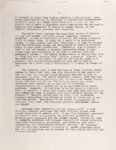
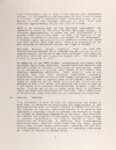
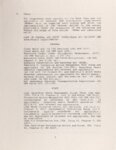
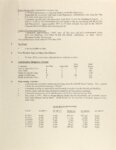
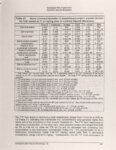
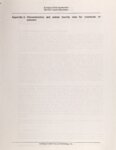
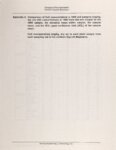
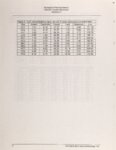
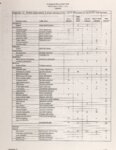
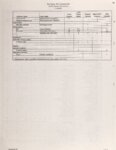
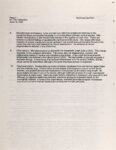
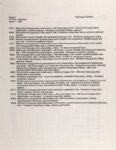
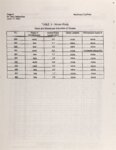
Show Ecological Risk Assessment ins Northern Oquirrh Mo ¥ Appendix 2 - Table lackground Concentrations for coc, CoC U.S.a As 5.1 Cd 0.21 Cu 13 - 29 17 20 Pb 17 - 26 16 30 -700 Se 0.3 Zn 34 a b e - - - 8.8 0.73 - U.S.c Project Area 5.2 6.5 n. d.' 17 0.26 0.7 84 48 45 e e 16 50 - - - UDDer Coon 9.6 d ERI-Loaan 12 2.2 1.5 105 60 65 61 d. 5 n. 120 126 e n. I, d. 120 Range of average concentations of uncontaminated soil in the U.S. Kabata-Pendias and Pendias, 1992. Geometric mean of U.S. background concentrations. Shacklette & Boerngen, 1984. Range of concentration depicted in Shacklette & Boerngen, 1984 maps for the area adjacent to the southeastern shore of the Great Salt Lake d - n. d. C .. Geometric mean of values from Sharma, et a/. 1979. Values used by ERI-Logan based largely on Fletcher (1977, 1984). n.d. eauals no data provided in referenced report. 2. Animal Toxicity 2.1 Search Strategy Information on the toxicity of the CoC to terrestrial wildlife was compiled from a review of original research reports. A comprehensive literature search was conducted using electronic databases available at Oregon State University, Portland State University, and Reed College. Additional databases were accessed through PORTALS, a Portland, Oregon, regional network that is accessible from office computers. The following databases were queried: Table 2. Databases Searched for Animal Toxicity Information Database Inclusive Dates 1n9 to 6/94 Agricola Biological Abstracts (BIOSIS) Biological and Agricultural Index 7/83 to 8/94 CAB Abstracts 1/87 to 6/94 Medline 1/89 to 6/94 Science Citations 1/90 to 6/94 Wildlife and Fisheries Review 1/71 to 2194 II " II I, I, 1/92 to 6/94 In addition, the synoptic contaminant hazard reviews by Eisler (US Fish and Wildlife Service Reports No.2, No.5, No.6, No. 12, No. 14, No. 26) and the National Research Council's compilation Mineral Tolerance of Domestic Animals (1980) were reviewed, and pertinent references were acquired for detailed analysis. Professional judgment and research experience were relied upon to determine the overall acceptability of study design and quality of reporting. The literature review was restricted to reports of studies where the CoC was fed to animals for a period of at least 3 weeks (i.e., a subchronic to chronic exposure). Studies in which animals were dosed by gavage once a day were not used, as it is difficult to convert a ppm-body weight dosinq schedule into a parts per million feed concentration. Studies on any animal species were considered acceptable, but more ecological plannlnq and toxicology, inc. 3 |