| OCR Text |
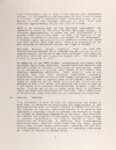
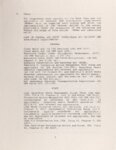
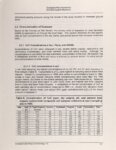
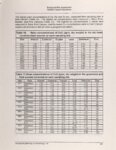
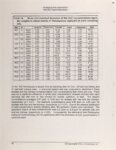
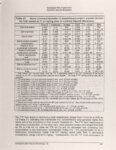
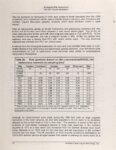
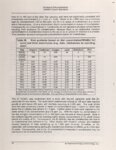
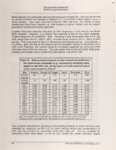
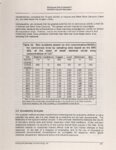
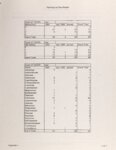
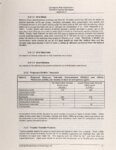
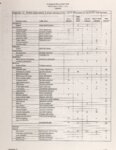
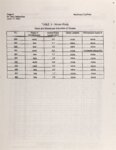
Show Ecological Risk Assessment Northern Oquirrh Mountains Peromyscus were successful at exploiting the protective cover of the loose rocks and greater vertical structure. We conclude that the current environmental concentrations of CoC in the northern Oquirrh Mountains are not adversely affecting populations of omnivorous mammals, as by Peromyscus. Tissues i'n the captured Peromyscus did not exhibit lesions represented related to CoCo Also there is no evidence suggesting that dietary concentrations of CoC or body burdens of CoC are adversely affecting the numbers of animals or reproduction in Peromyscus. 3.1.2 Herbivorous mammals Montane voles were combined with captured. and pocket mice, to evaluate this harvest mice granivorous mammals, represented by of concentration level. Cu, Pb, and Se exceeded the NOAEL at trophic Although dietary of histological lesions related to CoC in was no evidence there one or more sarnplinq sites, any of the herbivorous mammals. The most important factor affecting the presence and abundance of these species may be the quality of the habitat at each sampling site. Few herbivorous mammals were granivorous mammalian species were calculated by estimated as 98% vegetation and 2% from Table 26. This provides a mammals for herbivorous the NOAELs soil, by since seeds generally for of the concentrations conservative estimate dietary granivores have substantially lower metals concentrations than leaves and stems. Toxicity values are presented for both ruminants and other herbivorous mammals. The lower NOAEL was used in calculating the risk quotients, but both are discussed where dietary concentrations Risk quotients for herbivorous and dividing the estimated CoC concentration in diets, exceeded the lower NOAEL. The estimated concentrations of Cu in diets of mammalian herbivores at all sampling sites (except in CC1, CC2, and PC1) exceeded the 30 ppm NOAEL established from data on sheep, a species known to be very sensitive to Cu (Table 28). The highest estimated her bivore dietary concentration of 68 ppm Cu was found in BR 1. However, these dietary con centrations are well below the Cu NOAEL set for monogastriC herbivorous mammals (250 ppm) and herbivorous birds (500 ppm). The estimated concentrations of Pb in diets of herbivores at PC 1 and PC2 slightly exceeded the 30 ppm NOAEL. Dietary concentrations of As, Cd, and Zn did not exceed levels of concern at any site. Dietary Se concentrations exceeded the 4 ppm NOAEL. for ruminants in KC2, PC2, and PC3, but did not exceed the 10 ppm LOAEL based on a study with cattle. In PC2, the highest concentrations of Se were found in the most abundant plant, mulesears (Wyethia a mplexicaulis), which is seldom eaten by herbivorous mammals. However, Se concen trations were greater than the 10 ppm LOAEL in three of the six plant species collected from PC2, but did not exceed the LOAEL in any of six species collected from the nearby PC3. In KC2, the highest concentration of Se also was found in the most abundant spe cies, whitetop (Cardaria draba), a species that may be consumed by herbivorous mam mals. Whitetop was the only species in Kessler Canyon with a Se concentration exceeding the 10 mg/kg LOAEL. ecological planning and toxicology, inc. 71 |