| OCR Text |
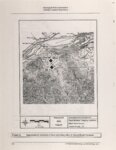
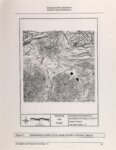
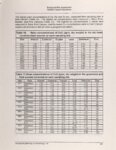
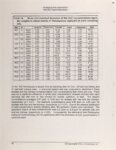
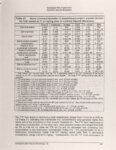
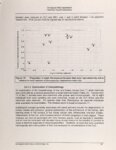
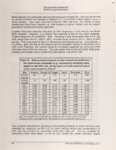
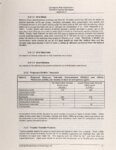
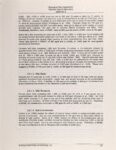
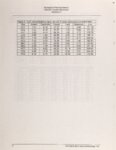
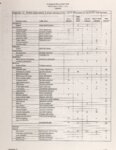
Show - Ecological Risk Assessment Northern Oquirrh Mountains Table 2. List of five most dominant taxa 'from 1994 sampling in decreasing order of dominance 1. Black Rock Kessler Canyon Muhlenbergia asperifolia Triticum aestivum Grindelia Bromus tectorum Muhlenbergia asperifolia squarrosa Elymus elongatus Grindelia squetrose Ambrosia psilostachya Grindelia squarrosa Cardaria draba r Pine Canyon Wash Canyon Bromus tectorum 1 Coon Canyon Little Valley Linaria dalmatica Poa secunda Asclepia asperula Acer Ambrosia grandidentatum pSiiostachya Wyethia sarothrae amplexicaulis Bromus tectorum Poa pratensis Gutierrezia Melilotus officinalis Poa pretensts Quercus gambelii Quercus gambelii Poa pratensis J The degree of dominance was calculated from the Releve importance parameter, which is based of the This data was derived from the relative cover, sociability, and frequency. Screening Level Report, Appendix O. Species list based on low elevation zone (1,370-1,680 m) for Little Valley Wash and Kessler and Black Rock Canyons and middle elevation zone (1,680-1,980 m) for Coon and Pine Canyons. The past emissions (including sulfur dioxide, fluoride, and the CoC) from the Garfield Smelter degraded the plant communities of the northern Oquirrh canyons, including Black Rock and Kessler Canyons and Little Valley Wash. The concentrations of some of the CoC in the soil and plants of these canyons still exceed the toxicity threshold values defined in the Problem Formulation of the Screening Level assessment for plants, invertebrates, and/or vertebrates. However, the number of plant species and amount of plant cover has steadily increased since the mid 1970s. Remediation efforts in lower Kessler Canyon have removed contaminated soil, introduced topsoil, and planted cover vegetation. Erosion control dikes and barriers have been established in the lower reaches of all three canyons. Vegetation has been planted throughout these canyons. Based on the 1994 Screening Level assessment, the northern canyons support a reasonably high diversity of plant taxa in a composition that sugg1ests the area is undergoing active and vigorous successional changes as it recovers from past stresses of sulfuric acid, fluoride, and heavy metal depositions. The on-going recovery of plant communities in areas where plant toxicity thresholds are exceeded provides evidence that threshold effect levels derived from laboratory studies are not always predictive of what is observed in the field. The past emissions from the International Smelter deposited Cd, Pb, and Zn in the Pine Canyon area that includes Dry, Pine, Pole, and Swensons Canyons. The lower elevations of Pine canyon have been graded and planted with cover vegetation. Grazing of livestock is intense on the lower elevations throughout this canyon, . hindering the recovery of plant and animal populations. 1.3 Characteristics of Chemicals of Concern The CoC for the Final Phase Assessment are As, Cd, Cu, Pb, Se, and Zn. The characteristics of these CoC and their toxicological threshold for plants and animals were described in the Problem Formulation Report of the Screening Level EcoRA (ep and t 1995a) and are repeated in Appendix 2 of this report. 8 ecological planning and toxicology, inc. J |