| OCR Text |
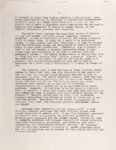
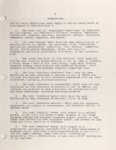
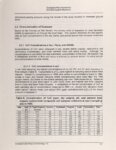
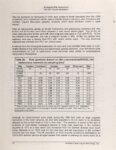
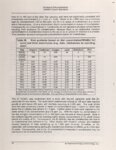
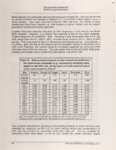
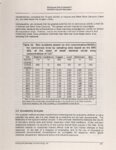
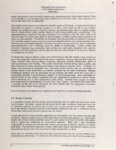
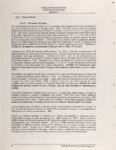
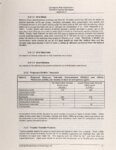
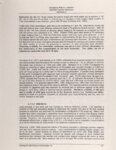
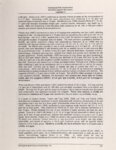
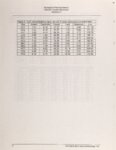
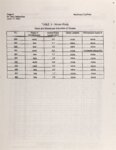
Show - Ecological Risk Assessment Northern oqutrrh Mountains 2.3.1.3 CoC concentrations in terrestrial in'vertebrates Surface-dwelling invertebrate samples consisted primarily of ground beetles (Carabidae) and other small beetles, spiders, and ants (Formicidae). Foliar invertebrate samples con sisted primarily of true bugs (Hemiptera), leafhoppers (Homoptera), beetles (Coleoptera), flies (Diptera), ants and wasps (Hymenoptera), moth and butterfly larvae (Lepidoptera), The majority of foliar invertebrates collected were herbivorous; the most and spiders. common camivorous invertebrates were ladybird beetles (Coccinellidae) and spiders. Aerial insect samples consisted primarily of moths (Heterocera), flies, and ichneumonid Although soil samples were exam.ined for soil-dwelling wasps (/chneumonidae). invertebrates, very few were found, primarily small ground beetle larvae. The measured CoC concentrations in surface-dwelling invertebrates and foliar herbivorous and camivorous invertebrates can be found in Appendix 5. Paired t-tests comparing CoC in concentrations surfaoe-dwelling VS. foliar invertebrates and toliar herbivorous vs. camivorous invertebrates did not detect any significant differences (p > 0.05) among groups for any of the CoCo Although the life histories of individual invertebrate species probably differed considerably, differences among surface-dwelling and foliar invertebrates probably were not observed because each sample consisted of several species representing a range of life histories. Consequently, the mean CoC concentrations in these groups were used in subsequent generalized insectivore diet (Table 12). analyses to characterize concentrations in a The highest As and Cu concentrations were measured in invertebrates from Black Rock Canyon (Table 12). Cadmium and Pb concentrations were highest in Pine Canyon, although Pb concentrations in invertebrates from BR1 were as high as Pine Canyon. Selenium concentrations were highest at KC2. Zinc concentrations were sirnitar at all sampling sites, except the concentrations in PC2 were approximately 100 ppm higher than any other sites. Table 12. Mean concentrations of CoC (ppm, dry weight) in all surface- dwelling and foliar invertebrates collected on each sampling site. Site Arsenic Cadmium Copper Lead Selenium CC1 0.76 3.9 37 1.9 0.62 158 CC2 0.71 5.3 39 1.3 0.74 190 LV1 7.25 4.1 59 3.1 2.03 159 LV2 2.11 3.5 65 7.6 2.39 151 KC1 9.00 4.7 72 2.0 8.02 161 KC2 0.99 4.7 77 2.2 13.44 173 BR1 17.30 1.6 91 21.5 5.11 107 9R2 31.51 1.6 109 7.8 5.02 129 -PC1 4.41 6.6 36 21.5 2.92 190 PC2 4.66 15.0 37 29.5 2.71 290 PC3 5.28 5.1 30 14.9 2.06 149 Zinc " Due to the cold and wet weather conditions during most of the upland sampling period, adequate samples of aerial insects for analysis were obtained from only three sampling sites: BR2, KC1, and LV2 (Table 13). Arsenic was highest in BR2, while Cd and Se were highest in KC1. Concentrations of Cu, Pb, and Zn were similar in the three samples. 44 CoC ecological planning and toxicology, inc. 1 |