| OCR Text |
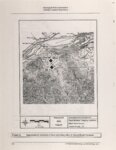
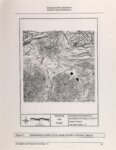
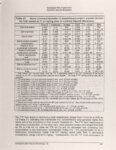
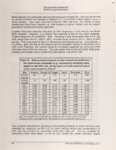
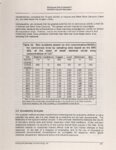
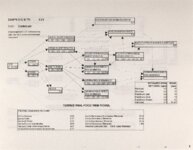
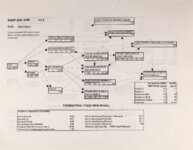
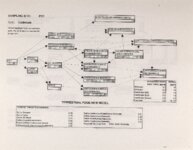
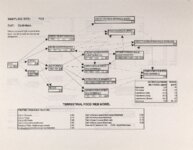
Show -. Ecological Risk Assessment Northern Oquirrh Mountains The concentrations of Se in the insectivore food chain seem to be a function of the presence and dominance of plant species that concentrate Se and are palatable to sites. 1 invertebrate consumers. Consequently, we concluded that the greatest potential risk from CoC to insectivorous birds and mammals is from Se in Kessler Canyon, and to a lesser extent in Black Rock Canyon, due to the relatively high Se concentration in invertebrates. Although the estimated dietary concentration of Se in Peromyscus diets was almost as high as estimated for insectivores, no adverse effects were observed in- Peromyscus from any CoCo Nor were Se-related effects observed on the reproductive success of blackbirds in the KUC-owned wetlands, even though Se concentrations in wetland invertebrates were often higher than those in the Oquirrhs (See Southshore Wetlands report.). However, the lack of information on Se toxicity to insectivorous birds and mammals makes the determination of the potential risk uncertain. We also conclude that the concentrations of Zn in invertebrates do not represent a risk to insectivores, since the Zn concentrations reflect background concentrations, rather than elevated concentrations, and these concentrations are below the LOAEL from the most conservative toxicity test reviewed. species in the northern Oquirrh Mountains is highly dependent on the abundance and diversity of invertebrates. Although the 1995 field work did not attempt to quantify abundance of invertebrates, the very short vegetation in most of the lower canyon areas did not support abundant invertebrate populations. Collections of foliar invertebrates were very limited in areas where vegetation was only a few centimeters in height. Although the expected major taxonomic groups were represented in the surface dwelling and foliar invertebrate samples, a qualitative assessment of the collected samples suggests the number of individual species was relatively low. Also, attempts to collect subsurface soil invertebrates in the top 15 cm of soil resulted in no samples. This may be due to the xeric conditions during the summer months and the low soil carbon content. Consequently, insectivore populations in the lower canyons may be limited because of a smaller invertebrate food base than may exist in areas with a more structurally complex plant community. The success of insectivorous . 3.1.4 Carnivorous birds and mammals Carnivorous birds and mammals were not directly monitored to determine presence and abundance and were not collected to determine individual effects. Estimated dietary concentrations of Cu, Pb, and Se exceeded the NOAELs at one or more sampling sites, but only Se concentrations in Kessler and Black Rock Canyons are high enough to present possible risk to carnivores. The Se concentrations in small mammals in Kessler and Canyons exceeded the LOAEL for carnivorous mammals. However, the foraging range of many carnivores may extend beyond these canyons into canyons with lower Se concentrations, thus reducing their dietary exposure. a Black Rock Risks to carnivores consuming primarily small mammals were estimated by calculating a of 100% animal tissue based on the 95% upper confidence limit diet consisting of (UCL) concentrations of CoC in the whole bodies of all small mammals captured on each sampling site. To calculate risk quotients for mammalian carnivores, the estimated the mean diet concentration was compared to the NOAELs for carnivorous mammals from Table 26 78 eccloaicat planning and toxicology, inc. , 1 |