| OCR Text |
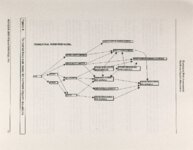
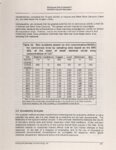
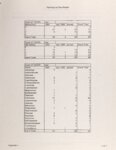
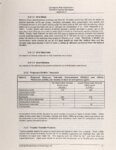
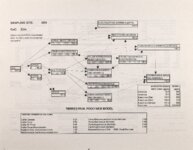
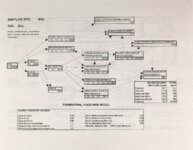
Show - Ecological Risk Assessment North Oquirrh Mountains Appendix 2 Mehring et 8/., 1960 Smith et 8/., 1975 Vermeer & Thompson, 1992 herbivores to II carnivores fish & crustaceans to piscivores Mehring et 8/., 1960 1.81 Vermeer & Thompson, 1992 (0.69-2.93) soil to inverts inverts to insectivores insectivores to carnivores 2.7 Lead Lead and Pb poisoning have been a part of human history since at least 4,000 B.C. Lead still is of the most common causes of poisoning in humans, domestic animals, and wildlife. It is not an essential mineral and can cause both acute and chronic toxicosis. Lead modifies the function and structure of kidney, bone, the central nervous system, and the hematopoietic system. Toxic signs include anemia, vomiting, nephropathy, irritability, peripheral neuropathy, one blindness, weight loss, abortion, kidney tubular necrosis, and liver degeneration. "Roaring" in horses is caused by Pb-induced laryngeal paralysis leading to loud respiratory sounds. Lead poisoned cattle frequently are observed grinding their teeth. The deaths of thousands of waterfowl over the past 75 years have been attributed to ingestion of spent Pb shot (Sanderson and Bellrose. 1986). Less well documented are chronic effects on wildlife from continuous ingestion of low levels of Pb in soil and food. 2.7.1 lioxic Effects 2.7.1.1 Domestic Animals Young cattle ted 10 or 100 ppm Pb as Pb-chromate in the diet for 100 days (n=16) showed no adverse effects (Dinius et a/., 1973). Similarly, young sheep (n=4) fed 10, 100, 500 or 1,000 ppm as Pb-acetate for 84 days had no adverse response (Fick et a/., 1976). Metallic Pb fed to yearling sheep at 550 Of 1,000 ppm (n=10) for 1 B9 days also caused no adverse effects (Carson et al., 1973). Therefore, based on these data, a NOAEL for Pb consumption by ruminants could be set at 1,000 ppm, with no information available for determining a LOAEL. This conclusion is supported by the NRC (1980) that states "dietary Pb at 1,000 ppm has been tolerated by ruminants and poultry for several months with no visible signs of toxicosis. n Horses are more sensitive to the effects of Pb than are ruminants (Aronson, 1972; Schmitt et a/., 1971). Horses fed diets containing up to 30 ppm Pb-carbonate experienced no adverse effects while nine horses exposed to BOO ppm for 196 days exhibited typical Signs (pharyngeal and laryngeal paralysis) of Pb toxicosis (Willoughby et a/., 1972a, b). Horses (n=20) grazing on a pasture contaminated with 325 ppm Pb for a year or more also showed toxic signs and several died (Knight and Burau, 1973). Based on these data, a NOAEL for horses would be estimated at 30 ppm with a LOAEL set at 325 ppm. Again, this is in agreement with NRC (1980) These values are representative of other monogastric mammalian recommendations. herbivores, as documented by the swine and rat studies listed below. Twenty-four young swine fed a diet containing 1,000 ppm Pb acetate for 91 days became anorexic and had decreased growth (Hsu et a/., 1975). There is no information on maximum tolerable levels of Pb in feed for swine. 14 ecological p,lanning and toxicology, inc. 1 |