| OCR Text |
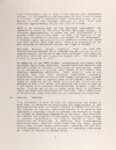
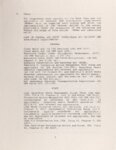
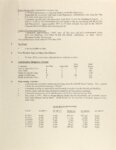
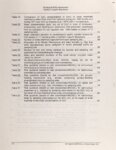
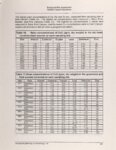
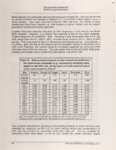
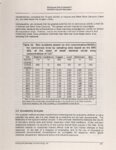
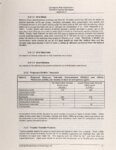
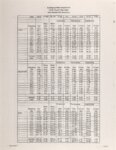
Show • Ecological Risk Assessment Northern Oquirrh Mountains Appendix 2 carnivorous and herbivorous arthropods (Table 16). Invertebrate to insectivore transfer factors are based on data on shrews. Trophic Transfer Factors for Cadmium Table 6. liver whole muscle kidney Reference body plants to 1.26 1.47 0.01 0.72 herbivores (0-2.90) (0-5.53) (0-0.06) (0.38-0.92) Cain et al., 1983 Hunter & Johnson 1982 Leach et a/79 Mills & Dalgarno 72 II II Powell et al., 64 Pritzl et a/197 4 herbivores to 10 carnivores 2.24 soil to inverts Laskowski 1991 (0.21-7.5) 1.93 inverts to insectivores (1.23-2.84) Laskowski 1991 Hunter & Johnson 1982 insectivores to carnivores 2.6 Copper Humans have relied on Cu for ornaments and tools since the Stone Age and, more recently, as a conductor of electricity. The literature on the biological essentiality of Cu and its toxicity is voluminous and several excellent comprehensive reviews are available (e.g., McDowell, 1985; NRC, 1977, 1980; Osweiler et a/., 1985; Schroeder et a/., 1966). The metabolism of Cu is closely interrelated with molybdenum (Mo) and inorganic sulfate with a deficiency of one of these three elements resulting in a syndrome suggestive of a toxicity of another. For the purposes of the current exercise, Mo and S will be considered as present in adequate amounts and only the toxicity (excess) of Cu will be discussed. Copper toxicity is evidenced by hemolysis, icterus, and anemia with accompanying hepatic and renal necrosis. Chronic Cu toxicosis resembles acute cuprosis with a sudden release of large amounts of Cu from the liver resulting in a hemolytiC crisis and sudden death. 2.6.1 Toxic Effects 2.6.1.1 Domestic Animals Ruminants are more sensitive to Cu toxicity than are monogastric animals and sheep are more sensitive to Cu toxicosis than are cattle (Osweiler et a/., 1985). About five percent of sheep Cu toxicosis on a diet 25 develop (hemolytic crisis) containing ppm Cu; a normal concentration in sheep diet is considered to be 8 to 11 ppm (Osweiler et a/., 1985). Hill and Williams (1965) (n=18 per group) 7.3, 26.6, or 40.7 ppm Cu-sulfate in their diet and observed no fed sheep adverse effects at 7.3 ppm, with reduced weight gain at 26.6 ppm and mortality at 40.7 ppm. Likewise, Adamson et al. (1969) reported on effects of feeding 170 sheep 38 ppm Cu-sulfate in their diet for 20 weeks, which resulted in hepatitis, myocardial hemorrhage, hemolysis and death of three of the sheep. Young cattle fed up to 900 ppm Cu-sulfate (125, 250, 300, 500, 600, ecological planning and toxicology, inc. or 11 |