| OCR Text |
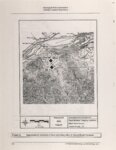
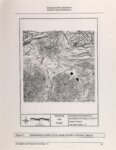
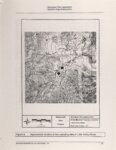
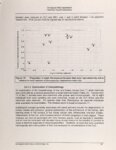
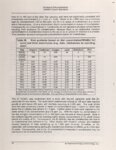
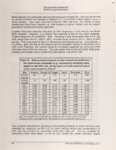
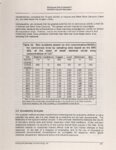
Show Ecological Risk Assessment Northern Oquirrh Mountains sampling sites. Of the 12 Peromyscus females from Kessler Canyon submitted for CoC analysis (six each that were or were not reproductively active), there was no significant difference in the mean whole body concentrations of CoC between = reproductively active and inactive females. Whole body concentrations of As (t -2.51, df several of the = 22, P = 0.020) and Cu (t = -2.29, df = 22, P = 0.032) were significantly higher in males compared to females in Kessler Canyon. White-footed mice (Peromyscus leucopus) were collected by Beyer et a/. (1985) smelter site in Pennsylvania and can be used for comparison. , at a The soil concentrations at the Pennsylvania site were 710 ppm Cd, 440 ppm Cu, 2,700 ppm Pb, and 24,000 ppm Zn, which were two orders of magnitude greater than Black Rock Canyon for Cd and Zn, 10- approximately half for Cu. White-footed mice contained whole Cd, Pb, and Zn approximately two times greater than those in body in Black Rock and Kessler Canyons. However, the whole body Peromyscus captured concentrations of Cu in Black Rock and Kessler Canyons were approximately 4 to 11 times higher than white-footed mice in Pennsylvania. All the mice necropsied by Beyer et al. (1985) seemed to be healthy with no lesions that could be attributed to metals, although aminolevulinic acid dehydratase (ALAD) activity was reduced indicating exposure to Pb. fold greater for Pb, and concentrations of There was no detectable pattern in the comparison of observed liver and kidney lesions from the histological examination with the concentrations of CoC in the livers of mammals collected from all sampling sites. The incidence and severity of these lesions also was not related to the environmental concentrations at the location of capture. more likely related to parasitic infestation. These observed lesions were Many of the findings were similar to those of Sharma et al. (1974). Sharma et al. (1974) examined the livers, kidneys, lungs, and bones of 109 rock squirrels from 18 locations in the northern Oquirrh Mountains for pathologic lesions and concluded that neither the type and severity of the lesions nor the incidence of pathologic changes was They also examined tissues of 10 mule deer--six from Upper Big (4.4 miles) from the Garfield Smelter and 12.5 km (7.8 miles) from the related to location. Canyon [7 km International observed Smelter] and four from the Garfield were non-significant and often were Smelter related area. to Most of the lesions parasites. None of the pathological lesions could be related to chemical residues in the tissues of mule deer, except those in bone that related to fluoride toxicosis. The higher populations of Peromyscus in Kessler Canyon than at other sampling sites may reflect the amount of structural for small mammals relative to other canyons. Throughout the Project Area small mammal abundance was greatest in areas of greatest cover structural cover, whether vegetative (e.g., tall grass or shrub patches) or abiotic (e.g., rock berms and loose rock piles). The vegetation in Kessler did not have the greatest percent vegetative ground cover, but there were greater vertical structure (i.e., patches of standing grasses and forbs) and more loose rock piles than in other sampling sites. Much of the in sampling sites of other canyons was characterized by very short vegetation cover, area primarily due to heavy grazing pressure by domestic and wild ungulates. The genus Peromyscus is the most widespread and geographically variable of North American rodents (MacMilien and Garland 1989) and can occupy a wide range of habitat types, living in burrows at the bases of shrubs and small trees or in rock piles. In Kessler Canyon, 70 ecological planning and toxicology, inc. T |