| OCR Text |
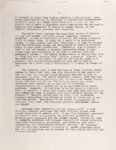
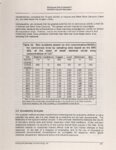
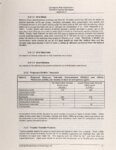
Show Ecological Risk Assessment Northern Oquirrh Mountains Appendix 2 Se concentrations of 60 ppm. Groce et a/. (1971) confirmed no adverse effects in swine at corn seleniferous 0.1-1.0 ppm. containing 5 or 10 ppm and Schoening (1936) fed swine observed signs of toxicosis only at 10 ppm. Wahlstrom et al. (1956) showed effects at 7, 10, anc 11 ppm that included decreased weight gain, cracked hooves, emaciation, and death by 1 weeks. Miller and Schoening (1938) fed swine diets containing 24, 49, 196, or 392 ppm sodium selenite and showed effects at all concentrations. Tinsley et a/. (1967) reported that a dose of 0.5 mg/kg body weight/day was the LOAEL affecting longevity in rats. He converted this to a 10 ppm basis by calculating that a 200 g rat eats 10 g of food per day. Harr et a/. (1967) reported that 0.5 to 2 ppm Se resulted in hepatomegaly in rats, although the duration of exposure was not stated. The most definitive quantitative estimate of NOAEL and LOAEL subchronic values was presented by Halverson et a/. (1966) who fed weanling male Sprauge-Dawley rats diets containing 1.6, 3.2, 4.8, 6.4, 8.0, 9.6; or 11.2. ppm for six weeks. No effects were reported in rats on diets containing up to 4.8 ppm Se. At 4.8 ppm, growth rates were depressed in rats receiving their Se as selenite but not in rats receiving their Se as seleniferous wheat. At dietary levels 6.4 ppm, reduced feed intake, increased mortality, splenomegaly, increased pancreas size, reduced liver weight and anemia were reported for rats on both treatments. Franke and Potter (1935) fed groups of nine Wistar rats diets containing 0, 22.3 or 33.5 ppm sodium selenite. Mortality was observed at 33.5 ppm (8/9 dead by day 359) while 22.3 ppm Se in the diet resulted in growth depression and increased mortality (5/9 dead by day 359). Survivors had marked liver necrosis and degeneration. Fitzhugh et a/. (1944) provided diets containing 5 ppm Se as seleniferous corn in a protein-deficient diet to rats for 24 months. After one year, mortality was no higher in treated rats than in control rats (14% vs. 11 %, respectively). Other rats fed diets containing 10, 20, or 40 ppm Se as ammonium potassium selenide had increased incidence of liver cirrhosis and liver tumors compared with controls. This suggests a NOAEL of 5 ppm and a LOAEL of 10 ppm. The US EPA (1984) accepted 3.2 ppm as a Se subchronic NOAEL. However, for ecological risk assessment, these data on horses, rats and swine, suggest a NOAEL of 4.8 ppm and a LOAEL of 6.4 ppm for monogastric herbivorous. Rhian and Moxon (1943) and Moxon (1937) studied the effects of Se in dogs. One dog was fed 7.2 ppm Se in seleniferous corn for 189 days and exhibited decreased food consumption and weight. Six dogs fed 10 ppm and ten dogs fed 20 ppm of Se as sodium selenite also decreased food consumption and appeared dull-eyed and sluggish. These data indicate a LOAEL for carnivorous mammals at 7.2 ppm with insufficient data to determine a NOAEL value. In a series of elegant studies, Franke and Tully (1935, 1936) and Tully and Franke (1935) described the teratogenic syndrome in poultry associated with excessive consumption of Se and ascertained that it was due toa "toxic grain" subsequently shown to be 15 ppm Se (Poley et a/., Poley and Moxon (1938) conducted a dose-response study chickens fed 2.5, 5, or 10 They observed no effects at 2.5 ppm, with a reduced hatchability at 5 and 10 ppm. Chicks hatching from the 10 ppm exhibited a higher mortality rate than the other groups. Poley et al. (1941) fed chicks 2,5,8,10, or 14 ppm Se and observed no effects up to 10 ppm; at 10 and 14 ppm growth was reduced and significant mortality occurred in the 14 ppm group. More recently, Thapar et a/. (1969) fed chicks a diet supplemented with 2 or 8 ppm Se for 76 weeks and observed marked reduction in egg production, body weight, and egg weight, hatchability, and growth of progeny in the 8 ppm treatment group, with no adverse effects 1937). ppm Se as toxic grains. observed in the 2 ppm group. Therefore, a NOAEL for Se in domestic fowl is 2.5 ppm with a LOAEL at 5 ppm. As with many other metals and metalloids, Se influences the immune system (Koller, 1980). In quantities 2.5 ppm), Se is immunostimulatory and occasionally is used as part of a cancer At higher doses, Se may be chemotherapy regimen (Koller et a/., 1986). immunosuppressive (Kiremidiian-Schumacher and Stotzky, 1987), although it appears that most small ecological planning and toxicology, inc. 19 |