| OCR Text |
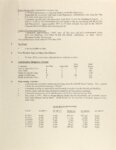
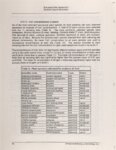
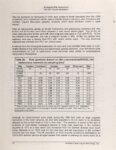
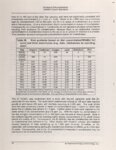
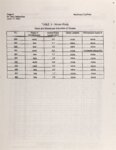
Show - Ecological Risk Assessment North Oquirrh Mountains Appendix 2 2.5.1.3 Wild Mammals No reports of Cd toxicosis in willd mammals were found. 2.5.1.4 1 Amphibians Manson and Flaherty (1978) studied the affect of Cd-contaminated water on limb regeneration in Animals were exposed to 2, 2.25, 2.5, 3, 3.5, 4,4.5, 6.75 ppm Cd in water (n=10 to 12 per group) for 60 days following amputation of the forelimbs. Significant mortality (>35%) occurred in all groups at or above 2.25 ppm and limb regeneration and morphology were significantly affected in survivors in these groups. Therefore, an amphibian NOAEL is set at 2 ppm with a LOAEL at 2.25 ppm Cd water. salamanders (Notophthalmus viridescens). or 2.5.1.5 Invertebrates Larsen et al. (1994) studied the effects of various heavy metals in sludge-amended soils on several invertebrates. Cadmium at soil concentrations of 2 or 4 ppm had no observable effects on ground or web spiders. Beyer and Stafford (1993) collected live earthworms from soils to 32 1.9 ppm Cd, although this study was not designed to look at earthworm containing impacts. Callahan et al. (1994) calculated an earthworm LC50 of 279 ppm for Cd nitrate. Van Gestel et al. (1992) conducted a rigoli"Ous study of effects of Cd and other chemicals on earthworms and determined that cocoon production was the most sensitive parameter for When Cd chloride was added to the soil at 11, 17, 29, 50, and 94 ppm, cocoon metals. These data indicate an production was significantly decreased at all concentrations. invertebrate NOAEl of 4 ppm and a LOAEL of 11 ppm. 2.5.2 Proposed Wildlife Threshold Table 5. Proposed Maximum Tolerable Concentrations (N,OAEL) and Effects Thresholds (LOAEL) for Cadmium in Feed for Wild Animals. (ppm) II II No Observable Adverse Effect Lowest Observable Adverse Level Effect Level (NOAEL) (LOAEL) Herbivorous birds 10 Ruminants 15 Carnivorous mammals Other mammals 12 - 30 ? ? 47.1 50 Amphlbians' 2 2.25 Soil organisms 4 11 1 Values reported for amphibians are water concentrations Values for acute cadmium toxicty were found in NRC (1980) and WHO (1992). The book Cadmium in the Environment (Nriagu, 1981) summarizes only feeding studies. The chronic threshold doses are at least an order of magnitude lower than any acute toxicity values. 2.5.3 Trophic Transfer Factors Trophic transfer factors for plants to herbivores are based on data from mice, voles, cattle, sheep, chickens, and ducks. Soil to invertebrate transfer factors include earthworms and 10 ecological planning and toxicology, inc. , t |