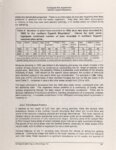
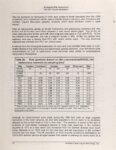
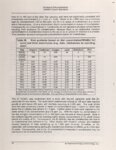
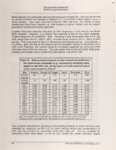
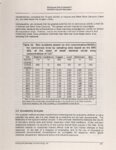
| OCR Text |
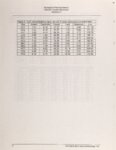
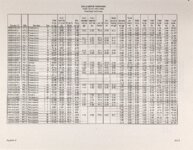
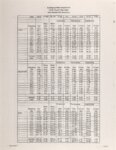
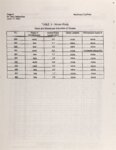
Show Ecological Risk Assessment Northern Oquirrh Mountains share any remarkable properties. There is no information to evaluate regarding their likely They may have been unsuccessful presence or absence from the extant vegetation. c or have been onizers, planted sparingly, or in remote areas not visited during they may our sampling. Table 6. Number of plant taxa recorded in 1994 plus new taxa recorded in 1995 in northern the represent combined canyons plus spine. Year Family Genus Spp. Oquirrh Not Weedy scored 1994 1995 Both 1 57 189 13 1 58 202 Mountains 1. number of taxa 340 89 31 4 371 93 for both Values recorded in northern Oquirrh Native Mid- Late- Not succes- succes- scored years lntroduced sion sion 80 77 110 75 215 12 10 8 4 23 7 118 79 238 73 92 87 Plants that could not be identified to at least the genus level were recorded as unknowns. 66 Unknowns plants identified to genus level only could not be classified as to niche or origin. For example, plus genera having native and introduced, or weedy and late-successional, species were not scored. some Because sampling in 1995 was limited to the trapping grid areas, the small increase in the number of taxa should not be construed as representing the full range of species in the project area. Most likely, the sampling reflects a substantial under-estimate of the diversity (richness) of taxa. With respect to the specific areas sampled, the number of individual For example in Little Valley, there was a 67% (22) increase of taxa identified bringing the total for the two years to 53 taxa (Table 7). Increases in taxa in the other areas ranged from 20% to 48%. taxa identified relative to last year's effort was considerable. The basic conclusions developed from the 1994 data alone remain unchanged even with The vegetation shows patterns of a community of mostly native the additional data. species progressing through the early stages of secondary succession. There are no obvious indications of phytotoxic conditions retarding development of a functional, complex plant community. Appendix 3. 2.2.2 A complete presentation of the 1995 plant sampling results is provided in Disturbance Factors In addition to the inputs of CoC from past mining activities, there are several other Oquirrh Mountains that affect the current flora and disturbance factors in the northern fauna of the canyons, including physical and biologic disturbances. The lower reaches of Kessler Canyon are active operational zones and areas under active remediation. the remediation areas are in early successional stages. Many of Similarly, parts of the canyon floor of Pine Canyon have areas of recent remedial action that are in early successional stages. The paucity of top soil in areas near the Garfield Smelter, especially on steep slopes of the canyon walls, acts to inhibit re-vegetation by many plant species. General features of the 11 sampling sites showed the effects of differential grazing pressure. Grazing by sheep and cattle in the lower reaches of Coon and Pine Canyons and Little Valley Wash represents a significant disturbance on the quality and quantity of ecological planning and toxicology, inc. 39 |