| OCR Text |
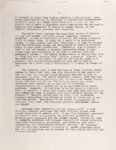
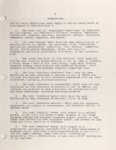
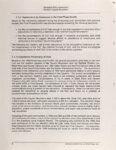
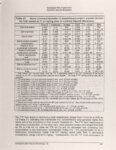
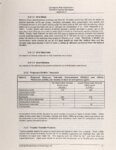
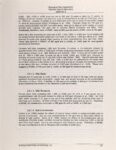
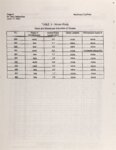
Show • Ecological Risk Assessment Northern Oquirrh Mountains Appendix 2 2.4.1.2 Wild Birds Mallard (Anas platyrhynchos) ducklings fed diets for 10 weeks containing 300 ppm As added as sodium arsenate (n=30 per group), exhibi,ted decreased feed consumption and growth and increased amount of time spent resting under the heat lamp at 300 ppm with no adverse effects observed in groups fed diets with 30 or 100 ppm As (Camardese et et., 1990; Whitworth et al., 1991). Further studies with mallard ducklings showed a similar decrease in growth rate at 200 ppm As in feed although there was no associated mortality or histological lesions (Hoffman et a/., 1992). Finally, adult mallards fed diets with 400 ppm As added as sodium arsenate had reduced overall duckling production, while diets containing 25 or 100 ppm As had no adverse effects on either the adults or the ducklings they produced (Stanley et al., 1994). Therefore, a NOAEL for herbivorous birds should be set at 112 ppm based on both the mallard data and the chicken data (see Section 1.2.4.1.1) with a LOAEL at 200 ppm generated from the mallard studies. 2.4.1.3 Wild Mammals No reports of chronic arsenosis in wild mammals were found. 2.4.1.4 Invertebrates No reports of the affects of As-contaminated soil on invertebrates were found. 2.4.2 Proposed Wildlife Threshold Table 3. Proposed Maximum Tolerable Concentration and (NOAEL) Effects Thresholds (LOAEL) for Arsenic in feed for wild animals (ppm) No Observable Adverse Lowest Observable Adverse Effect Level Effect Level (NOAEL) (LOAEL) 112 200 285 570 50 ? ? 10 Herbivorous birds Insectivorous birds Carnivorous birds Ruminants Other herbivorous mammals Insectivorous mammals Carnivorous mammals I nve rtebrates An excellent review of the literature on acute toxicity of arsenic is found in Eisler (1994). same studies were cited These in Opresko, Sample and Suter (1994) as primary references and so can be presumed to be SCientifically acceptable and, therefore, were used for comparison with the chronic values discussed above. 2.4.3 Trophic Transfer Factors Trophic transfer factors for plants to herbivores are based on data from mallards. Eisler (1994) reports that bioconcentration factors for As in aquatic organisms are relatively low, with the exception of algae (see Table 14). The maxima were six times for As+5 and nine times for organoarsenicals. Algae were shown to survive and accumulate up to 50,000 ppm dry weight ecological planning and toxicology, inc. 7 |