| OCR Text |
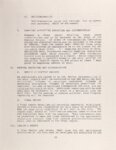
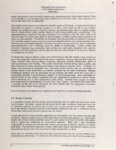
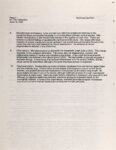
Show Ecological Risk Assessment Northern Oquirrh Mountain Appendix 2 Pigs also exhibited physiological changes (anemia) beginning at 50 ppm with decreased weight gain evidenced at 150 ppm, although death was not seen even when Cd-chloride concentratlo: as high as 1,350 ppm were added to feed for 42 days (n=3-4 per group) (Cousins et aI, 1973); 10 0.1 ppm caused no adverse effects for up to 6 months (Sharma et al., 1979). Cadmium levels of and 0.56 ppm in com fertilized with sewage sludge caused no adverse effects when 16 swine foraged on the com fields 5 months (Hansen and Hinesly, 1979). Adult rats fed diets with 200 ppm Cd from mating through parturition (n=10) had reduced weight gain and food consumption and decreased weights of neonatal pups, although there was no effect on pregnancy or whelping (Pond and Walker, 1975). A similar reproduction study by Zenick et al. (1982) looked more closely at the dose-response relationship by feeding rats 17.2, 34.4, or 68.8 ppm Cd-treated diets for 70 days. There was no effect on testes weight or histopathology, spermatozoa, female breeding behaviors, or whelping at any of the test Banis et al. (1969) found reductions in weight gain in weanling rats fed diets containing 100 ppm Cd for four weeks (n=10) and Mahaffey and Fowler (1977) also reported weight reductions in rats fed 50 ppm Cd diets for 10 weeks (n=14). Watanabe et al. (1986) fed mice for 2 years on Cd-polluted rice with average Cd concentrations of 0.12,0.48, 1.78, and 47.1 ppm without observing an adverse effects. The pig, rat, and mouse data suggest a NOAEL for monogastric herbivorous mammals of 47.1 ppm and a LOAEL of 50 ppm. concentrations. Adult chickens fed 3, 12, or 48 ppm Cd-sulfate for 12 weeks exhibited decreased egg production at 12 and 48 ppm concentrations (n=10 per group) (Leach et al., 1979). Young male leghorn chickens fed 400, 600, 700, 800, or 1,000 ppm (n=20 per group) showed significant effects and mortality at all concentrations (an LCso of approximately 600 ppm was determined). Laying hens had decreased egg production when fed diets containing 60 ppm Cd (Sell, 1975). Japanese quail (Coturnix coturnix japonica) are more sensitive to Cd effects and grew more slowly with a higher mortality rate than normal during four weeks on a 75 ppm Cd diet (Jacobs et al., 1969) and developed bone marrow hypoplasia, anemia, and hypertrophy of the heart after six weeks (Richardson et al., 1974). These data suggest a LOAEL for herbivorous birds of 12 ppm based on egg production, with a NOAEL of 3 ppm. 2.5.1.2 Wild Birds Eisler (1988) cites White and Finely (1978) when stating that birds are comparatively resistant to the biocidal properties of Cd. White and Finley (1978) and White et al. (1978) showed that adult mallards (Anas platyrhynchos) fed 2,20, or 200 ppm Cd for 90 days all survived with no loss of body weight, although egg production was suppressed and significant histopathological lesions occurred in the kidneys at 200 ppm. However, mallard ducklings are more sensitive than adults, with alterations in blood chemistry and severe kidney lesions evident after being fed 20 ppm Cd for 12 weeks, with no adverse effects seen in ducklings on 5 or 10 ppm diets (n=12; Cain et al., 1983). Heinz and Haseltine (1983) demonstrated hyper-responsiveness in young American black ducks (Anas rubripes; n=14) produced from parents fed 4 ppm dietary Cd for four months before egg laying. They considered this behavioral effect potentially harmful to wild birds, this conclusion is purely speculative since they did not conduct follow-up studies to although demonstrate any ecological effects. In fact, Gray and Scanlon (1979) saw no such avoidance behaviors in 5-day old mallards tested in open fields after feeding on 10, 50, or 250 ppm Cd treated diets. Based on these data, and excluding the contradictory behavior studies, a NOAEL for wild herbivorous birds would be set at 10 ppm and a LOAEL at 20 ppm. For herbivorous birds in general, therefore, the LOAEL should be set at 12 ppm since the gallinaceous birds (chickens and quail) showed somewhat greater sensitivity than the ducks, and a NOAEL should be set at 10 ppm since both groups of birds have no documented effects at this concentration. ecological planning and toxicology, inc. 9 |