| OCR Text |
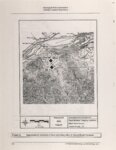
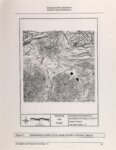
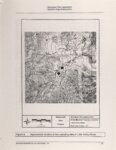
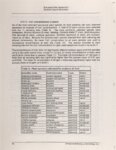
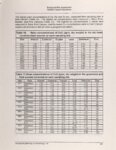
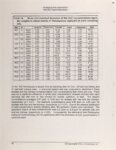
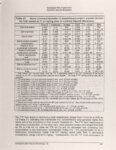
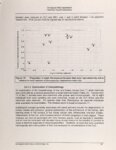
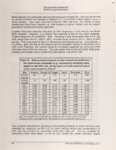
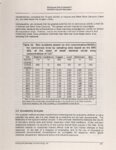
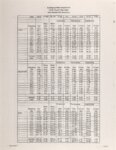
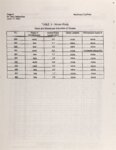
Show Ecological Risk Assessment Northern Oquirrh Mountains 2.2 Ecosystem characterization In general, plant communities in the flatter areas within the lower Oquirrh canyons are characterized as mixed grass and forb meadows with patches of shrubs. Trees were also patchily distributed in the lower elevations of Coon and Pine Canyons and Little Valley Wash. Cattle graze in Coon and Pine Canyons in summer months, and sheep graze in Little Valley Wash. Releve sampling was conducted at each sampling site to characterize the vegetation composition and structure. 2.2.1 Plant Community Characterization at Sampling Sites The sites sampled in 1995 were restricted to flat terrain in the low elevation zones of Black Rock Canyon, Kessler Canyon, Little Valley Wash, and the mid elevation zone of Coon Canyon (Figure 5). In Pine Canyon, the sampling sites were located in the mid-elevation zone. The only flat terrain sufficiently large to contain a small mammal trapping grid in Pine Canyon was on the crown of the eroded slopes. Consistent with the overall EcoRA objectives, 11 sampling sites were placed in areas dominated by grasses and forbs. In Black Rock Canyon and Kessler Canyon, vegetation in the areas surrounding the plots was visually similar to vegetation in the plots. In Little Valley Wash, Coon Canyon, and Pine Canyon, the surrounding vegetation was dominated by woodland patches. Vegetation on the sampling sites in June, 1995, was dominated by herbaceous species. Bromus tectorum was the most dominant taxon in Black Rock Canyon and Little Valley Wash; it ranked 2nd in Kessler Canyon and Pine Canyon; and it was ranked 31st in Coon Canyon. Cardaria draba, Poa secunda, and Grindelia squarrosa were important dominants or co-dominants across the five locations. Diversity (Le. Species richness) was lowest in Black Rock Canyon (29 taxa), highest in Pine Canyon (63 taxa), and intermediate in the three other locations (Appendix 3). The standing dead of grasses and forbs in Kessler Canyon provided considerable cover ranging from several centimeters to more than one meter in height. A qualitative ranking of cover from standing dead vegetation was Kessler Pine Canyon. Canyon » Black Rock Canyon » Coon Canyon> Little Valley Wash Unlike standing dead vegetation, Similar qualitative ranking of litter was also evident. which had largely been grazed or trampled in Little Valley Wash and Coon Canyon, the lowest new-growth cover was recorded in KC 1 and Black ock Canyon as a whole (Table 5). The low percentage cover in KC1 reflects the high quantity of large rock at the soil = surface. Some of the sampling sites, such as KC1 and PC1, had high amounts of surface rock and cobble (Table 5). Much of the surface rock in KC1 was large (i.e., > 10 cm diameter) and patches >50 cm diameter. In the other sites, the rocks were cobble-sized (i.e., <5 cm diameter). Because the grids had different amounts of surface rock, the index of plant cover was normalized to the percentage soil (i.e., 1-% rock). The normalized cover values show smaller differences among sampling areas. often grouped into clusters occupying ecological planning and toxicology, inc. 37 |