| OCR Text |
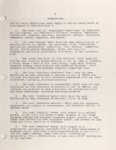
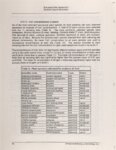
Show • Ecological Risk Assessment Northern Oquirrh Mountains 1.1.2 Summary of 1994 EcoRA The Screening Level of the EcoRA conducted in 1994 1) identified patterns in the current distributions of CoC in soil and plants from several locations within the Core Project Area assessed the current status of vegetation communities in relation to past studies and 3) 2) potential problems of greatest concern for further assessment of plants and animals. The CoC for the Screening Level EcoRA were potential identified by the U. S. EPA as arsenic (As), cadmium (Cd), chromium (Cr), copper (Cu), identified locations and effects to lead (Pb), selenium (Se), and zinc (Zn). The findings from the northern Oquirrhs indicated that As, Cu, and Pb in the soil occurred along a decreasing gradient from higher concentrations in Black Rock Canyon to lower concentrations . Canyons, more related to the distance from the Garfield Smelter. in Coon and Harkers The distribution of Se was variable, but showed a decreasing trend with increasing distance from the Garfield ' smelter. Screening Level EcoRA used two methods for comparing measures of exposure (based primarily on measured concentrations of CoC in soil and animal diets) with measures of effects (based primarily on laboratory toxicity tests): 1) a quotient method and 2) probability distributions. The quotient method calculates a value by dividing a point estimate of exposure concentration in the diet [usually the 95% upper confidence limit (UCL) of the mean] by a dietary toxicity value. Dietary toxicity was expressed as the lowest-observable-adverse-effects level (LOAEL) or the no-observable-adverse-effects level (NOAEL). Probability distributions were used to estimate what proportion of the Distributions of dietary available diet of an animal exceeded a dietary toxicity value. concentrations were modeled based on measured concentrations of CoC in samples collected within the Core Project Area. The 1. 1.2.1 CoC in Herbivore Food Chains (1994 EcoRA) Sampling during 1994 indicated that Cu concentrations (i.e., 95% UCL of the mean) in plants exceeded the NOAEL for herbivores (e.g., deer, elk, voles, rabbits) in Black Rock and Kessler Canyons. Lead concentrations exceeded the NOAEL for herbivores in Pine Selenium exceeded the LOAEL Canyon, but were below the estimated LOAEL. concentrations for herbivores everywhere except the Spine [i.e., highest elevation areas, > 2285 m (> 7,500 feet)], apparently due to bioaccumulation in the plants. Chromium did not exceed estimated toxicity thresholds in any location. 1.1.2.2 CoC in the Insectivore Food Chains (1994 EcoRA) Soil concentrations exceeded toxicity thresholds for surface-dwelling-dwelling invertebrates (e.g., ground beetles, earthworms) in Black Rock, Kessler, and Pine Canyons for As, Cd, and Cu and in Pine Canyon for Pb and Zn. Coon Canyon had soil Cu concentrations that exceeded estimated toxicity thresholds for invertebrates. Cr did not exceed estimated Insufficient data were available to generate reliable exposure estimates for insectivorous or carnivorous wildlife for any of the CoC, so the risk threshold values for soil invertebrates. to these organisms was indeterminate. ecological planning and toxicology, inc. 5 |