| OCR Text |
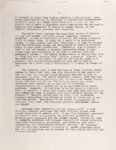
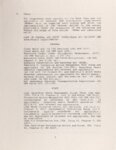
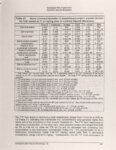
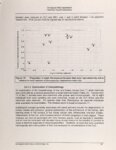
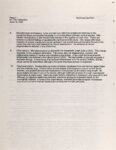
Show Ecological Risk Assessment Northern Oquirrh Mountains Appendix 2 Eight-week old rats (n= 10 per group) fed rations mixed with mine waste soil to achieve 1, 10, 25, 100, or 250 ppm Pb showed 0 clinical signs or changes in body weight, organ weights, or food consumption in any treatmen group after 30 days (Freeman et a/., 1992). Three cats (Fe/is domesticus) were fed a diet containing 5.7 ppm Pb, obtained by mixing cat food with minced pine voles (Pitymys pinetorum) from a Pb-arsenate-treated orchard. After 86 diet, the cats showed no adverse effects related to Pb toxicosis as compared to three days cats fed control diets (Gilmartin et a/., 1985). Staples (1955) gave daily doses of Pd carbonate to dogs, ranging from 3 to 1000 mg Pb/kg body weight, until toxic signs were observed. A 12.7 kg dog was fed 3 mg Pb/kg daily (equivalent to approximately 38 ppm Pb in the diet) for over five months before the first signs of listlessness and anorexia were observed. On the 180th day on the dog went into a clonic convulsion and was later terminated for necropsy and residue analysis. No other reports of chronic Pb poisoninq in domestic or wild carnivores were identified. Therefore, a NOAEL for mammalian carnivores was set at 6 ppm without information on relationship of this concentration to the toxic threshold. The LOAEL for Pb in the mammalian carnivores was set at 38 ppm. Hermayer et al. (1977) and Damron et a/. (1969) conducted dose-response studies with chickens and demonstrated that Pb-oxide or Pb-acetate caused no effects at 1, 10, or 100 ppm in diet and decreased egg production at 1,000 and 2,000 ppm. Simpson et al. (1970) investigated the effects on chickens of higher concentrations of Pb-acetate and reported mortality at 5,000 and 10,000 ppm. (1982) fed chickens Pb-acetate-containing feed at 25 and 50 for 4 weeks with no effect on egg production. A parallel study conducted ppm (n=10 per group) Edens and Garlich by the same investigators with Japanese quail (Cotumex cotumex japonica), showed decreased egg production at 10 ppm Pb-acetate in feed, but not at 1 ppm. On the other hand, Morgan et a/. (1975) reported that five-day old Japanese quail fed 1, 10, or 100 ppm Pb-acetate in their diet for up to 42 days showed no adverse effects, while 500 and 1,000 ppm decreased growth and caused anemia. It is generally agreed (NRC, 1980; Scheuhammer, 1987) that birds must eat a diet containing at least 100 ppm to be clinically affected. The reported extreme sensitivity of egg production in Japanese quail may represent an anomaly due to particular aspects of the study desiqn or, more likely, reflect an extreme species sensitivity. Therefore, a NOAEL of 100 ppm and a LOAEL of 1000 ppm should be set for domestic poultry (i.e., herbivorous birds), keeping in mind the possible exception of Japanese quail hypersensitivity and the need for further research in this case. 2.7.1.2 Wild Birds reported in 1919 by Wetmore (1919). This spawned a laboratory studies to determine the number and size of Pb shot causing toxicosis in waterfowl and what liver Pb concentration is indicative of Pb poisoninq. Many more Lead toxicosis in wild birds was first number of field and studies have been conducted to determine tissue concentrations in various free-ranging wildlife species, but this information is rarely tied to an environmental concentration or concentration as ingested. Therefore, this large body of literature will not be reviewed here as it is difficult to extrapolate effects from a single bolus of Pb (i.e., a Pb shot) to soil or vegetation concentrations or to utilize information on tissue levels in the absence of exposure data. Grue et a/. (1984; 1986) studied the effects of Pb along roadsides on starlings (Stumus vulgariS) and adult barn swallows (Hirundo rustica). Lead concentrations in starling ingesta ranged from Adults showed no effects as determined by clutch size, body weight, and 84 to 94 ppm. biochemical parameters. Nestlings showed an anemia and changes in other biochemical but numbers that hatched and numbers that fledged remained the same as those parameters seen in a reference site. Barn swallows had 3.2 to 6.8 ppm Pb in their stomach contents and ecological planning and toxicology, inc. 15 |