| OCR Text |
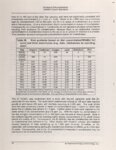
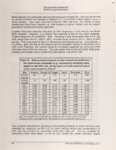
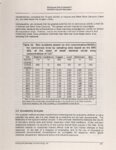
Show Ecological Risk Assessment Northern Oquirrh Mountains increase in the percent mortality of kits from birth to 4 weeks and a decrease in kit Consequently, the mammalian carnivore NOAEL for Cu was set a 110 weight. ppm and the LOAEL was set at 160 ppm. Smith et al. (1988) conducted a study on the effects of Se (as selenomethionine) Diets on reproduction in black-crowned night-herons (Nycticorax nycticorax). containing 10 ppm Se were not found to affect night-heron reproduction, but 30 did not ppm produced a reduction in body weight. Screech owls (Otus asia) also selenomethinine as 10 Se at (Wiemeyer, ppm experience reproductive impairment unpublished data). Consequently, the avian carnivore NOAEL for Se was set at 10 ppm and a LOAEL at 30 ppm. In the Screening Level EcoRA, the NOAEL for Pb in mammalian carnivores was set at 6 ppm, based on a study with three cats (Felis domesticus) fed pine voles (Pitymys pinetorum) for 86 days from an orchard treated with Pd arsenate (Gilmartin et a/. 1985). However, no effects were observed and a LOAEL could not be established. In order to estimate the concentration of Pb potentially toxic to carnivores, published literature was reviewed that was originally rejected in the literature search strategy, such as studies using daily gavage of doses (See Appendix 2 for details on original search strategy). Staples (1955) gave daily doses of Pd carbonate in gelatin capsules to dogs, ranging from 3 to 1000 mg Pb/kg body weight, until toxic signs were observed. A 12.7 kg dog was dosed with 3 mg Pb/kg daily for over five months before the first signs of listlessness and anorexia were observed. On the 180th day the dog went into a clonic convulsion and was later terminated for necropsy and residue analysis. USing a conservative assumption that dogs consume food at a rate similar to a red fox (i.e., approximately 80 g food/kg body weight from USEPA 1993), 3 mg Pb/kg is equivalent to approximately 38 ppm Pb in the diet. Consequently, the LOAEL for Pb in mammalian carnivores has been set at 38 ppm. 1.6 Endpoint Selection endpoint is "a characteristic of an ecological component (e.g., increased mortality of fish) that may be affected by exposure to a stressor" (Suter 1990). Two types of endpoints are used in ecological risk assessments: assessment endpoints and measurement end points. Assessment endpoints are "explicit expressions of the actual environmental value An that is to be protected" (USEPA 1992). For example, assessment endpoints may be the key indicators used to determine whether natural populations are surviving, growing and reproducing. Measurement endpoints are "measurable responses to a stressor that are related to the valued characteristics chosen as the assessment endpoints" (USEPA 1992). They consist of the actual types of data assessment endpoints. 1.6.1 collected for the purpose of evaluating the Assessment Endpoints Assessment endpoints for the EcoRA were defined as follows in the Work Plan: ecological planning and toxicology, inc. 11 |