| OCR Text |
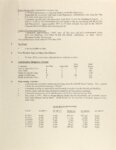
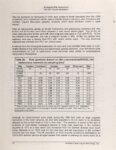
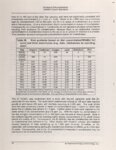
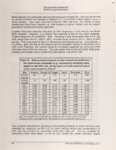
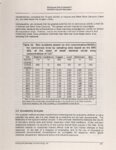
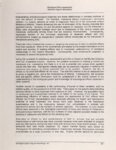
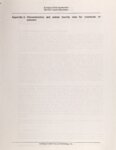
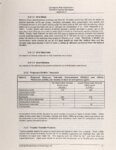
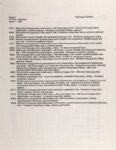
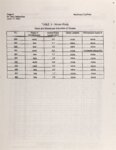
Show .. Ecological Risk Assessment North Oquirrh Mountains Appendix 2 piscivore transfer factor is from a study of marbled antiguus), comparing ingesta to tissue levels of As. As. The murrelets (Synthliboramphus 1 Trophic Transfer Factors for Arsenic Table 4. liver kidney bone muscle whole Reference body 0.02 plants to herbivores (O0.17) Camardese et al., 1990 I' II Hoffman et aI, 1992 Stanley et al., 1994 herbivores to carnivores 9.5 Vermeer & Thompson, crustaceans (0- 1992 to piscivores 26.1) fish & soil to inverts inverts to insectivores insectivores to carnivores 2.5 Cadmium Cadmium is a relatively rare metal in nature and there is no evidence that it is biologically essential or beneficial. Tissue residues have been measured in over 1,000 species of freshwater and terrestrial biota (Eisler, 1985). Elemental Cd is insoluble in water and, consequently, has a low toxicity. However, its chloride and sulfate salts are freely soluble. Anemia, demineralization, and kidney damage are the principal adverse effects of Cd (NAS, 1980). 2.5.1 bone Toxic Effects 2.5.1.1 Domestic Animals Wright et al. (1977) fed cattle 50, 100, or 200 ppm Cd as Cd-succinate for 343 days (two animals per treatment concentrations. group) and Sharma et al. observed reproductive abnormalities (dead fetuses) at all fed similar numbers of cattle 2.4 or 11.3 ppm Cd as Cd (1979) chloride for up to six months without observing any ill effects. In a study by Smith et al. (1991), 36 heifers were fed 0.25, 1, or 5 ppm Cd in the diet for over a year (394 days). No signs of toxicosis were evident in either the heifers or in 5-day old calves from the exposed cattle. Powell et al. (1964) fed cows much higher concentrations of Cd (0,40, 160,640, or 2,560 ppm; n=6 per group) for 12 weeks. Death occurred at or above 640 ppm Cd with decreased growth, food consumption and testicular development seen at 160 ppm Cd. No effects were observed at or In sheep, adverse physiological effects (decreased weight gain) were first below 40 ppm. observed at 30 ppm when sheep (n=6 per group) were fed 5, 15, 30, or 60 ppm Cd-chloride for 191 days (Doyle and Pfander, 1975), and reproduction was affected at all doses when fed 50, Goats fed com silage 100, 200, 300, or 500 ppm Cadminate (n=2; Wright et ai, 1977). containing 5.3 ppm Cd for three years showed no ill effects, based on organ weights and whole body weights (Bray et al., 1985). Based on these data from cattle, sheep and goats, a NOAEL for ruminants is 15 ppm and a LOAEL is set at 30 ppm. 8 ecoloqicat planning and toxicology, inc. |