| OCR Text |
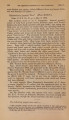
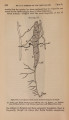
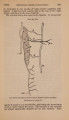
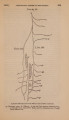
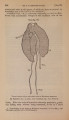
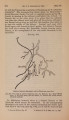
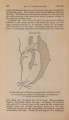
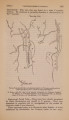
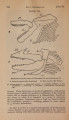
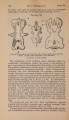
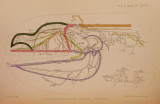
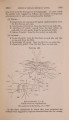
Show 1 0 2 0 MR. L. R. CRAWSIIAY ON THE ARTERIAL [Dec. 11 The arrangement was rather different in the two species of Bufo, but in all the six species of Rana it may be said that the independence of these three branches and their association respectively with the proximal, median, and distal portions of the intestine was distinctly marked. For purposes of comparison I will therefore refer to them as the proximal, median, and distal rami. The proximal ramus soon divides in the mesentery near the end of the first loop of the intestine. A large branch is then given off' which soon attaches itself to the surface of the gut, running along the duodenum to the pylorus, where it generally anastomoses with the distal portion of the A. gastrica dextra. As previously mentioned, in R. catesbiana it took up the whole function of that artery, running for a considerable way up the right side of the stomach (text-fig. 146, p. 1017). R. tigrina and one specimen of R. clamata were the only examples in which no such anastomosis was observed. In Bufo mauritanicus a small vessel was given off at the bile-duct (A. pancreatica ])osterior, Gaupp) and ran a considerable way along it, supplying the pancreas, &c. This vessel was also present in one specimen of R. temporaria, and may have escaped my notice in other individuals, though I did not observe it. The other portion of this branch of the mesenterica anterior runs backwards, and normally, unlike the duodenal portion, shortly breaks up in the mesentery into a variable number of vessels which mostly further subdivide, confining themselves roughly to the first half of the small intestine. Such was the case in R. temporaria, clamata, tigrina, catesbiana, and hexadactyla. In R. esculenta, instead of division in the mesentery, a single vessel ran along the wall of the intestine like the duodenal portion. Bufo boreas was the same as R. esculenta. In B. mauritanicus the intestinal portion took off* from the main trunk quite independently of the duodenal portion of this ramus and more distally. The median ramus runs for some distance unbroken and then divides and subdivides rapidly in the mesentery into a number of vessels, which are distributed roughly to the distal half of the small intestine. The variation to which this branch is liable among individuals of a species seems to be too great to admit of comparison being drawn between the species themselves. The distal ramus {rr. hcemorrhoidales anteriores, Gaupp) is, as a rule, almost confined in its distribution to the large intestine. R. tigrina was exceptional in that about one-third of it went to the small intestine. More often its first vessel reaches the gut nearly on the border line between these two regions. Its independence as a distinct unit of the mesenteric system was clearly shown in all the species except in B. boreas, where it was more difficult to differentiate it from the median ramus. In R. tigrina it wTas very much broken up in its course through the mesentery. In R. esculenta it reached the intestine as a single vessel only. Posteriorly, it usually runs back in close contact |