| OCR Text |
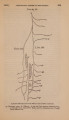
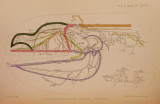
Show 1906.] RESPIRATORY SYSTEMS IN TTIE OPI1IDIA. 529 additional evidence for the position which I ventured to take up in a recent communication to the Society*. I there expressed the view that the tracheal lung typically exists in the Ophidia, and that those cases where no traces are to be found are to be looked upon as a reduction from a former state of affairs where the tracheal lung was fully developed and functional. It seem unlikely that the reverse is the case, and that the various genera in which undoubted remains of a tracheal lung are now to be found have independently acquired that structure. If such instances were limited in number to a very few, that view might with greater reason be adopted. As it is, it appears, from what we know of comparative anatomy, to be not at all likely that a complex series of modifications, resulting in the change of structure and vascularisation of a membrane uniting the separate edges of the tracheal semirings, should independently and so constantly occur as the facts would then demand. The new instances which I have been able to bring forward in the present communication thus furnish additional arguments for the correctness of my way of looking upon the matter, as I think. It is interesting to note the ways in which the tracheal lung has disappeared. In two Snakes so remote in the system as are Coluber corals and Sepedon hcemachates we have a practically identical disposition of the lung. In both, the precardiac portion of the lung is a very wide sac along which the trachea runs as a gutter, and at the lowest extreme of which only is there any development of lung-tissue. There is no question here of a tracheal sac separate from the ensuing lung. Both organs are evidently continuous. Nor is there a fixed line of demarcation between the two regions ; the one fades into the other. On the hypothesis of a reduction, the structure of both of these genera can be derived from such a condition as is preserved in the Viperidse ; or, if the introduction of a family, generally regarded as much modified, be objected to (though it does not follow that the Yipers are not archaic in one particular structure), then the Boid Ungcdict may be adduced, so far as I can judge from Prof. Cope's statements. In Coluber longissimus and Erythrolamprus cescidapii, two Snakes equally as remote from each other as are the two examples just treated of, the modification is evidently taking place along slightly different lines. In these Serpents the lung has apparently shrunk in diameter before commencing to atrophy as a lung, but the process of lung disappearance has taken place from before backwards. The initial stage of this series of modifications is offered by such a type as Chersydrus granulatus, in which the tracheal lung, according to Cope's figure t, is of considerably less calibre than the tracheal lung of a Viper. These are the two principal lines along which the degeneration of the tracheal lung has taken place: i. e., firstly the disappearance of the lung-tissue, * " Contributions to the Anatomy of the Ophidia," P. Z. S. 1906, vol. i. p. 41. f Loc. cit. pi. xiii. 36* |