| OCR Text |
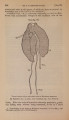
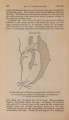
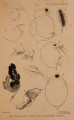
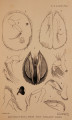
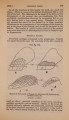
Show 08 2 SIR C. ELIOT ON NUDIBRANCHS [June 19, corners, as in many Aeolids. The formula of the radula is 47 x 20.1.20, increasing in a few rows to 23.1.23. B. The larger of the two specimens is bent, but about 25 mm. long and 15 mm. wide, the margin being spread out. The colour is grey ; the under surface, and especially the side-lamellae, darker. Most of the external characters in both specimens are the same as in A : the globular body behind the branchiae, the anterior groove and corners of the foot, and the parts in front of the rhinophores. But the dorsal surface appears very different, since it bears 15-20 ridges divided by smooth areas. These ridges are formed of tubercles more or less fused together. They are all small compared with those of A, but in one of the specimens they are larger than in the other, less fused together, and some bear spots as in A. The two specimens do not agree in details, showing that there is a considerable tendency to variation. The radula in the specimen opened is about 42 x 16.1.16 as a maximum, but many rows are shorter. I propose to call this form L. variolosa, var. striata. C. One rather large specimen, yellowish with traces of red and brown here and there. Not so well preserved as the others and rather soft. Length about 60 mm., breadth about 27. The external characters are mostly the same as in the other specimens, but the organ behind the branchiae is less globular and more clearly resembles a swollen lamella. The greater part of the back is covered with large and small tubercles as in A, the larger being pitted at the top and having a diameter of about 2 mm. But in the median part of the anterior half these tubercles give place to ridges like those found in B, composed of small prominences more or less fused together. The formula of the radula is 63 x 25.1.25. In a few rows there are 27 laterals. The character of the dentition and jaws is the same in all the specimens. The median tooth is broad, and bears 8-9 denticu-lations and ridges on either side of the central cusp, which has itself one or two small denticulations. In specimen A this central cusp is lower than in the others. The first lateral bears about 8 denticles on the outer side. The second lateral also bears about 8 denticles, and has something of the clumsy shape shown in Bergh's plates (I. c. plate ii. figs. 17-20). The third lateral is more erect, and bears about 4 denticles (rarely 5-6) near the top, and often one or two more arranged irregularly lower down and sometimes quite near the base. The fourth lateral bears one or two denticles, rarely three. The remaining teeth are smooth and hamate. The jaws are large, strong, brownish yellow, and bear 5-6 rows of knob-like dentitions along the edge. In Bergh's specimen only three laterals were denticulate, whereas in all which I examined the denticulation extended to the fourth tooth. This difference, however, hardly amounts to a specific character, unless it be found to persistently accompany other peculiarities. The proper description of the radula is probably: the first few laterals denticulate, the rest smooth. |