| OCR Text |
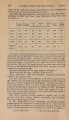
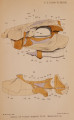
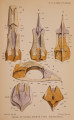
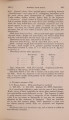
Show 8 6 2 MR. OLDFIELD THOMAS OX [Nov. 27, 5 . MlCROMYS SPECIOSUS PENINSiJL/E, subsp. 11. 6 . 688, 696, 713, 714, 723. ? . 655, 677, 700, 709, 716. Min-gyong, 110 miles S.E. of Seoul. 1200 . d. 724, 729, 730, 732, 733, 738. £ . 725. 10 miles N. of Taiku, S. Korea. 1000-1300'. Like true Japanese M. speciosus, but with longer and more hairy tail. General appearance of winter specimens quite as in Japanese examples. Fur soft and fine, quite without spines ; hairs of back about 9-10 mm. in length. General colour above pale rufous-fawn, the dorsal area finely lined with black. Lips, cheeks, and whole of under surface white ; the hairs slaty for their basal lml ves. Ears brown. Upper surface of hands and feet silvery white. Tail averaging longer than in true speciosus, generally longer than the head and body, well-haired to the tip. the hairs practically hiding the scales; white on the sides and below, the brown of the upper surface narrowed to a line rarely attaining 2 mm. in breadth : in true speciosus the brown covers the whole upper surface of the tail ; tip occasionally pencilled with white. Mammae 2-2 = 8. Skull and teeth as in speciosus, except that the palatine foramina are usually rather shorter, more open, and with more smoothlv-rounded edges, and the bullae average smaller. Dimensions of four specimens, measured in the flesh Head & bod}'. Tail. Hind foot. Ear. mm. mm. 111111. mm. d . 6 9 6 1 0 7 I ll 2 3 -5 15 5 . 7 2 3 1 0 0 1 0 9 2 4 16 ?■ 7 1 6 1 0 6 111 2 4 15*5 7 0 9 (Type). 1 0 9 1 0 8 2 4 -5 16 Skull (of type)-greatest length 29 mm.; basilar length 23 ; greatest breadth 14*1 ; interorbital breadth 4*2 ; breadth of brain-case 12*2; palatal foramina 5*6 X 2*3; length of upper molar series 4. Type. Female. B.M. No. 6.12.6.45. Original number 709. Collected 12 December, 1905. This Mouse shows such evident signs of relationship to the Japanese M. speciosus that I have little doubt that in summer, like its island ally, it acquires a spiny coat. I am well aware that most modern mammologists would call this animal a species, and not merely a subspecies, both on grounds of distribution and constancy of characters. But it appears to me one of the cases where the immense convenience of showing by the name the exact alliance of the animal should override theoretical definitions as to what are " species " and what " subspecies. In the genus Micromys, with its six well-defined and distinct " good species ' (in the old sense), from two to four of them present in every locality between Ireland and Japan, a binomial term such |