| OCR Text |
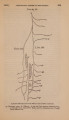
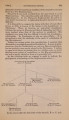
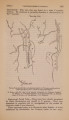
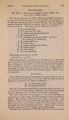
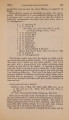
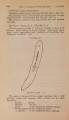
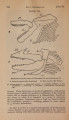
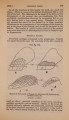
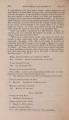
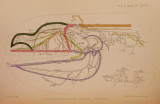
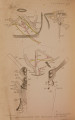
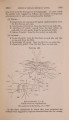
Show GOG MR. F. E. BEDDARD ON THE [May 29, upon the right side of the body, its usual position not so much in the Lacertilia as in the Ophidia generally. It is of very limited extent in the present lizard, and after reaching the neighbourhood of the vertebral column plunges at once into the thickness of the parietes. It appears on the surface for a brief interval between the two following intercostal arteries. Five intercostal arteries then intervene before the next appearance superficially of the vertebral vein, which is here developed upon both sides of the vertebral column. The longitudinally running vein of the left side is the more important of the two and draws blood from six intercostal spaces ; the right-hand vein is shorter but developed in the same region of the vertebral column as the left. The two vessels join and enter the liver near to its anterior end together by a common trunk. This trunk receives before it reaches the liver a branch from the stomach, the g astro-hepatic, which is in its turn composed of two vessels, one of which runs along the stomach forwards and the other passes along the stomach towards its posterior end. This posterior gastro-hepatic vein has other rather unusual relations with the portal system. It gives off* a small branch which goes at once to the liver. Posteriorly it does not communicate with the general portal system of the alimentary tract as in other Lizards, but ends by joining the anterior abdominal vein behind the point where the latter receives the intestinal portal. The somewhat complicated relations of these several veins will perhaps be rendered clearer by an inspection of the accompanying diagram of their course (text-fig. 101). In possessing that anterior system of parieto-hepatic veins which are connected with the gastro-hepatic veins, Heloderma does not merely differ from the more typical Lacertilia, but agrees with the Boine snakes, the snake-like Lizard Ophisaurus*, with Hat-teria, and, as will be seen presently t, with the Varanidse, though to a less extent with these also aberrant Lizards. The entire separation of the gastric from the intestinal portal system is also noteworthy; and it will be obvious that, in spite of the points of resemblance with other Squa.mata insisted upon, the details of this part of the venous system are peculiar to Heloderma and distinguish it from other Lacertilia. Heloderma possesses, as do all other Lacertilia which have been examined, a series of veins entering the right lobe of the liver close to its posterior extremity, the posterior dorsal parieto-hepatic veins. These vessels originate by several roots, which unite to form one trunk as in Varanus. There are four separate roots, which arise from the parietes on the right side of the body and lie between three intercostal arteries. The single trunk formed by their union enters the right lobe of the liver close to the postcaval vein, and by the aid of a fold of membrane which, as in so many * Beddard, P. Z. S. 1005, vol. ii. p. 474. t Infra, p. 616. |