| OCR Text |
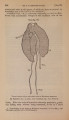
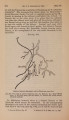
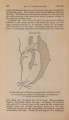
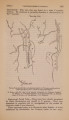
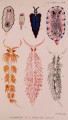
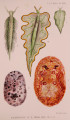
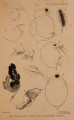
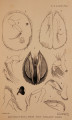
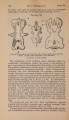
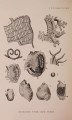
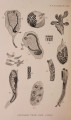
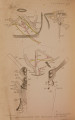
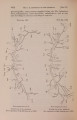
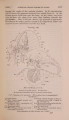
Show 68G SIR C. ELIOT ON NUDIBRANCHS [June 19, E olis h u s s e y i Kelaart. (Plate XLV. fig. 6 .) (Kelaart, 1. c. II. p. 490.) Though this species is described and figured with a distinctness which will probably be sufficient for recognition, it is not easy to assign it to any definite genus. It may be a Cratena or Cuthonci. Several Cratence are recorded from the Indo-Pacific, and Cuthonci bicolor from Japan. It is also not impossible that it may be a Phestellct, as the form of the head cannot be distinctly seen. E olis nodulosa Kelaart. (Plate XLY. fig. 7.) (Kelaart, 1. c. II. p. 491.) This species will perhaps be recognised by the character of the rhinophores. The plate, confirmed by the description, represents them as bearing three strong annulations, an unusually small number. E olis e f fu lg ens Kelaart. (Plate XLIII. fig. 4.) (Kelaart, 1. c. II. p. 491.) This is perhaps a Facelina. The rhinophores are perfoliate, and a sketch of the lower surface (not reproduced) shows that the front of the foot is produced into distinct tentacular processes. The elongate shape of the body, large oral tentacles, and the general arrangement of the cerata agi ee with the generic characters. The animal will probably be found again, as it is said to occur in great numbers in Dutch Bay and other parts of the sea near Fort Frederick. The drawings of Eolis jmulince (PL XLIII. fig. 6) and Eolis tristis (PI. XLITI. fig. 5), which are reproduced, will probably enable any one who re-discovers the animals to recognise them, but in the absence of further details it is useless to speculate on their generic position. S t il ig e r ? v ir id is (Kelaart). (Plate XLYI. fig. 3.) (Pterochilus viridis Kelaart, 1. c. II. p. 492.) Pterochilus is the original name of Embleionia A. & II., discarded because it was found to be already used in Entomology. The present animal is more probably allied to Stiliger. It can hardly be Ercolcmia zanzibarica Eliot (Proc. Zool. Soc. 1903, ii. pp. 256-7), which has club-shaped cerata, though the coloration is similar and both animals are found in seaweed. The " numerous, long, linear, acutely pointed cerata" somewhat resemble Trinchese's figure of Placida tcirdyi. It is difficult to distinguish satisfactorily Stiliger, Ercolctnia, and Placida (Laura). PhYLLOBRANcnus o r ien ta l is (Kelaart). (Kelaart, 1. c. II. p. 492. Alder & Hancock, 1. c. p. 145. Of. Phyl. prcisinus Bergh in Semper's Reisen, Heft ii. pp. 52-87.) Six specimens are preserved, much contracted and hardened, |