| OCR Text |
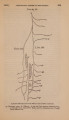
Show 1 9 0 6 .] RESPIRATORY SYSTEMS IN THE OPHIDIA. 531 that Lioheterodon and Heterodon are distinct. The lung confirms Boulenger's view of the separateness of these genera. I have already referred to the long headward extension of the lung in Heterodon, which nearly reaches the head. In Lioheterodon madagascarwnsis this diverticulum of lung is only | of an inch in length, and is anangious at its free extremity. Moreover, in Heterodon, the interannular membrane is very narrow; in Lioheterodon on the other hand, as I have already partly indicated in another communication upon the Ophidia*, the membrane in question is much wider than are the tracheal semirings. Near to the heart are two folds across the membrane which result in the formation of a pouch. This is not unsuggestive of the pouches in the Hamadryad Snake f. In any case the differences in lung-structure between the two genera will be obvious. § Resume o f Principal Facts. From the foregoing account of new facts in the structure of the Ophidia I may select the following as embodying the principal results:- (1) The umbilical vein largely persists in Boa, as in Eunectes, as a functional vessel. In Python there are less conspicuous traces of it ; but it is distinctly recognisable in P. molurus and P. regius as well as in P. sebce. No blood-holding diverticulum of the post-caval has been yet met with in Colubrine Snakes, the only vestige of the embryonic umbilical being a membranous seam on the liver of Coluber corais. (2) The additional facts recorded in the present communication support the probability that a forward prolongation of the renal afferent vein to the region of the gonads, which is to be regarded as part of a persistent post-cardinal, is characteristic of the Boidae and at least not characteristic (though rudiments may occur) of the Colubrine Snakes. So far the Boidae lie at a lower level than other Snakes. (3) In some, but not in all, Boidae the parietal tributaries of the renal afferent vein are connected at their emergence from the body-wall by a continuous longitudinal trunk which extends from behind to in front of the kidney. In the region of the kidney this longitudinal vessel gives off no branches to the kidney itself. In the Colubrine Snakes, on the contrary, there is no such longitudinal dorsal parietal vessel; but intercostal veins may emerge from the parietes in the region of the kidney to cross it and enter the afferent renal vein. But there is no direct connection of these intercostals with the ca,pillary network of the kidney such as has been found to occur in the snake-like Lizards Ophisaurus and Amphisbcena. (4) The generality of the occurrence in the Boidae of but a * P. Z. S. 1906, vol. i. p. 12. t Beddard, P. Z. S. 1903, vol. ii. p. 319. |