| OCR Text |
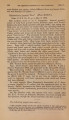
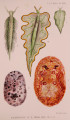
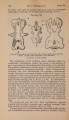
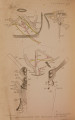
Show 4 6 4 MR. OLDFIELD THOMAS ON A NEW ANTELOPE. [M a y 1* most distinct new species, widely different from any known form, and was described as follows :- C e p h a lo ph u s w a l k e r i Tlios.* (Plate X X X Y .) Abstr. P.Z.S. No. 31, p. 1, May 8, 1906. Size medium, about as in G. leucogaster. General groundcolour of body dark greyish brown (between sepia and Prout s brown), the hairs finely speckled with pale buffy ; but along the back, over an area about six inches wide, the speckling died out, and the colour darkened to nearly black, the hairs here being " hair-brown " at their bases and dark blackish brown at their tips. Under surface and inner side of limbs little lighter than sides, about " hair-brown." Top of muzzle brownish black ; forehead to between ears, including the frontal tuft, deep glossy black. Cheeks and chin pale fawn, a narrow edging to the black above the eyes stronger buffy. Ears large, their backs grizzled brown or blackish, their bases and the fringe along their anterior edges fawn. Nape with a narrow median black line connecting the frontal and dorsal areas of black, edged on each side first with a lighter and then with a rather darker longitudinal band. Limbs wholly dark, before and behind, the digits nearly black. Tail imperfect in the type, its base dark above, dull whitish below. Length of fore foot, from " knee" to tip of hoof, 180 mm., this being about the same length as in C. leucogaster and other middle-sized species. No other exact measurement was obtainable, but the prepared skin was 33 inches from nose to base of tail. Hab. Tuchila River, about 25 miles from Blantyre, Nyasa. Type. Adult female; skin without skull. B.M. No. 6.4.21.1. Shot in September 1905, and presented by Mr. Samuel W. Frank. This interesting Duiker differed so widely from any known species that Mr. Thomas found it difficult to say to what group of the genus it should be assigned. Perhaps it would prove to have an affinity with G. niger, but in any case no definite opinion could be expressed until male specimens, with skulls and horns, had been obtained. In some respects Herr Neumann's description of G. leuco- 2)rosopus t applied to G. walkeri, but the statements that in the former " Bauch, Innenseite der Beine und Kehle sind weiss'' and " die Stirn ist roth " conclusively proved that it could not be of the same species. By Mr. Frank's wish the species had been named after Mr. E. G. Walker, of Ndirandi, Blantyre, who had actually shot the specimen, though Mr. Frank had been the first to see it. The following papers were read * [The complete account of the new species described in this communication appears here; but since the name and preliminary diagnosis were published in the ‘ Abstract,' the species is distinguished by the name being underlined.- E d i t o r 1 f SB. Ges. nat. Fr. Berl. 1899, p. 18. |