| OCR Text |
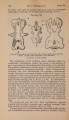
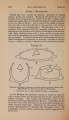
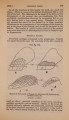
Show 1906.] OF SOUTHERN INDIA AND CEYLON. 649 (even if proved to be the rule) can exclude it from the genus. PI. variegata Bergh has a labial armature. On the other hand, the dorsal papillae are a marked point of difference. In any case, the form seems to be intermediate between Platydoris and Asteronotus, and to have little affinity to Discodoris. D oris e x a n th em a t a Kelaart. (Kelaart, 1. c. I. p. 300.) ? = Asteronotus hemprichi Ehrenberg. Hancock has written on Kelaart's drawing " D. mauritiana Q. & G. ? " This latter species is identified with Aster onotus ccespitosus, and Kelaart's drawing, more than his description, supports the idea that the animal is the common Asteronotus of the Indo-Pacific. Whether there is really more than one species is doubtful. If there is only one, the name A. hemprichi Ehrenberg has priority. Kelaart's statement that D. exanthemata is " semi-gelatinous and . . . when dead rapidly dissolves and cannot be preserved in spirits" is against this identification. Asteronotus may perhaps be compared to a stiff solid jelly, but it can be preserved without difficulty. The statement that the spawn is of a beautiful red colour is interesting. I have found this red spawn and Asteronotus in the same locality at Zanzibar, but cannot prove by observation the connection between the two. Kelaart had a strange dislike of this animal, which he thinks " gives one more the idea of a horrid disease than the charms of a sea-nymph." But Asteronotus, though not particularly beautiful either in shape or colour, is not a revolting object. Very fair representations of it are given by Bergh (Siboga, pi. i. fig. 5, and Notes from the Leyden Museum, 1887, pi. vi. fig. 9) and Eliot (Proc. Zool. Soc. 1903, ii. pi. xxxiv. fig. 5). K entrodoris Bergh. The Kentrodorids are perhaps nearly related to Jorunna. They are also, especially K. macidosa (annuligera), allied to Thordisa and Diaulula, from which they differ chiefly in having the verge armed with a spine. Only three species have been described, all from the Indian Ocean :- 1. K. rubescens B. 2. K. gig as B. 3. K. maculosa (Cuv.) -K. annuligera B. K entrodoris m aculosa (C u v .). (Cuvier, Ann. du Mus. iv. 1804, p. 466-7. Quoy & Gaimard, Astrolabe, 1832, Zoologie, tome ii. p. 249. = Doris funebris Kelaart, Ann. Nat. Hist. 3rd series, vol. iii. 1859, p. 293 ; and A. & H. 1. c. p. 122. = Kentrodoris annuligera Bergh.) |