| OCR Text |
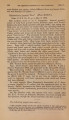
Show 5 4 2 MR. OLDFIELD THOMAS ON [May 15, of the front of the canines. Posterior palate practically without vacuities. Anterior portion of bullae considerably larger than posterior. Teeth with the same relative proportions to each other as in Ph. minutissima, but conspicuously smaller throughout, both absolutely and in proportion to the size of the skull. Upper secator (last premolar, the " p4 " of the Catalogue of Marsupials) about twice the size of the subequal anterior and median premolars. Lower secator about half the size of the anterior premolar, which is in turn about half the size of the median one. Dimensions of the type, measured in the flesh:- Head and body 80 mm.; tail 60 ; hind foot 10 ; ear 9. Skull-greatest median length 18 ; basal length 17 ; zj^gomatic breadth 9*7 ; nasals 6 6x3; inter orbital breadth 3*8 ; breadth of brain-case 8"5 ; palate length 8*7 ; length of upper tooth-row 8 ; combined length of three anterior molariform teeth 3*1 ; length of lower tooth-row 7*2. A female skull is smaller, 16 mm. in greatest length. Hab. Alexandria, central part of Northern South Australia. Alt. 600'. Type. Male. B.M. No. 6.3.9.77. Original number 111. Collected 30 April, 1905. Three specimens. This remarkable little species looks externally like a more pallid representative of Ph. minutissima, but the peculiar characters of its skull and teeth show that it is really a quite distinct animal. I have much pleasure in naming it after Sir William Ingram, to whose initiative and generosity the Museum is indebted for the sending of a collector to this most interesting locality. 15. S mtnthopsis l a r a p in t a Spencer. cS. 101, 102, 112, 116. $ . 93, 100, 119, 144. Alexandria, 600'. <S . 146. S.W. of Alroy, Alexandria. " Native name 4 Baraga.' Caught among dead timber on plain."- W. S. This is a very beautiful drab-grey species, with a contrasted dark line running down the muzzle, and with the centre of the sole naked as far back as a point equidistant between the heel and the tip of the hallux. It was first obtained at Charlotte Waters, Central Australia, during the Horn Expedition, and was described by Prof. Spencer, who unfortunately, working only from spirit-specimens, did not mention the dark facial line, which is, however, clearly marked in a metatype in the Museum collection. S. nitela Collett *, of which we have a co-type, would appear to be the same animal, Dr. Collett having been misled by the absence of all reference to the facial line in the original description, and the metatype in the Museum having only been received * P. Z. S. 1897, p. 331. |