| OCR Text |
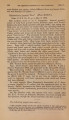
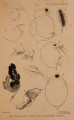
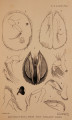
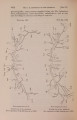
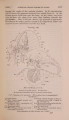
Show 10 0 2 SIR C. ELIOT OX THE NUDIBRANCHS [Dec. 11, denticles beneath the smaller prong. The innermost cannot he seen plainly, but they appear to be lower and broader than the rest, as is usual in this genus, and are probably denticulate on both sides. The outermost teeth also cannot be clearly seen. D oris m a c c a r t i iy i Kelaart. = Casella maccartiiyi (Kelaart). C. cincta Bergh. The buccal parts confirm this identification. The labial armature is composed of hooked rods, bifid in parts but not everywhere. The radula is a close pavement of very minute teeth with a formula of about 250 x 60.0.60. Owing to the teeth being erect it is difficult to see the denticles, but there are at least six on the outer side and probably more. The innermost teeth have also at least 2 (probably 2-4) denticles on the inner side. The outer teeth are smooth. D oris a p ic u l a t a A. & H. 1. c. p. 123. = Halgerda apiculata (A. & H.). ? = Halgerda punctata Farran, 1. c. pp. 339-340. One radula with the note " no collar." The hinder part is in disorder, but there appear to be about 33 rows, which in the midde of the radula contain 45-50 teeth on either side of the rhachis. Those near the centre are more spaced than the rest; they have long bases and low hooks, and the innermost point towards the rhachis. The general effect is that there is a large bare space in the middle of the radula with a few teeth in it. The teeth increase in size outwards up to the middle of the row. The hooks are strongly bent, and the bases rather long, though proportionally not so long as in the teeth near the rhachis. The last 3-4 teeth are degraded and almost spoon-shaped. In a few cases the upper edge of the outermost tooth bears one or two irregular jags. This animal will probably prove to be identical with the later Halgerda punctata of Farran. Both the radula and the external colour agree fairly well. The mantle of D. apiculata is said to have borne " elevated conical centres, each of which bears a delicate style or filament," and the plate represents the same character. The preserved specimen of H. punctata bore simple tubercles, which were described as papilla? in the living animal. A more definite description is desirable, but it is quite possible that the filaments mentioned by Alder and Hancock are the same as these papillae. D oris Formosa A. & H. = Platydoris formosa (A. & H.). Formula of radula about 50x 120.0.120. The teeth are hamate, moderately slender, and increase in size outwards. The innermost are lower than the rest and cross one another, meeting |