| OCR Text |
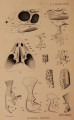
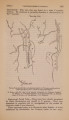
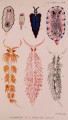
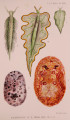
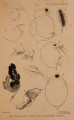
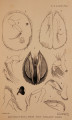
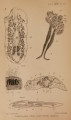
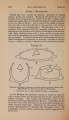
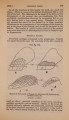
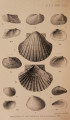
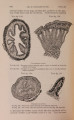
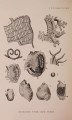
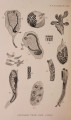
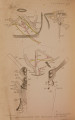
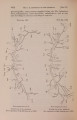
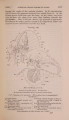
Show 1 9 0 6 . ] OF SOUTHERN INDIA AND CEYLON. 6 8 5 In general appearance the animal must be something like Pleurophyllidia formosa, but is probably of a more uniform light rose-colour. P n iD iAN A u n il in e a t a (A. & H.). (Plate XLVII. fig. 1.) (A. & H. 1. c. p. 143. Bergh, System, p. 1031.) Six specimens are preserved, but have become completely dry and hard. No characters could be ascertained except the buccal parts, which were found in one specimen. The jaws are rather long and narrow, somewhat decayed, but showing in places a row of large distinct denticles. Twelve teeth were found. They are yellow and bear from 6 to 9 (PI. XLVII. fig. 1) denticles on either side, the highest of which is on the central cusp. The number of denticles often appears to be only seven when it is really more, because the additional denticles are very small. This form seems to be clearly a Phidiana. S am la bicolor (Kelaart). (Plate XLV. fig. 4.) - Samla annuligera Bergh. (Eolis bicolor Kelaart, 1. c. II. p. 490. Bergh, Schauinsland's Reise nach der Pacific : Die Opisthobranchier, pp. 236-9.) If reliance can be placed on external characteristics, these two forms are undoubtedly identical as they agree both in shape and colour. Not only are the arrangement* and coloration of the cerata the same, but both have the oral tentacles strongly developed and rhinophores with a short stalk and perfoliate club. It only remains to ascertain that Eolis bicolor has a triseriate radula. It is said to be found among seaweed in Back Bay, Trincomalee, and will be easily recognisable. The genus Samla, founded on a single specimen, differs from Flabellina only in having the corners of the foot rounded and no penial armature. It may be doubted if these characters are of more than subgeneric value. E olis sm edley i Kelaart. (Plate XLV. fig. 5 .) (Kelaart, 1. c. II. p. 492.) The ringed rhinophores and tentacular processes of the foot indicate that this is probably a Facelina, and the lar^e oral tentacles and disposition of the cerata are in keeping with the supposition. But none of Kelaart's Aeolids (with the exception of E. bicolor) can be identified with known forms or referred to modern genera with any certainty. This is nob the fault of his drawings (which are better than those of the Dorids), but is due to the fact that most tropical Aeolids have been described from preserved specimens. The external appearance in life is often wholly unknown, for they lose their colour and shape in alcohol even more completely than Dorids. * Kelaart's statement that the anterior clusters are " composed of 34 or morP o rm o r * '' ^ ^ ^ ° f tlU'ee5" ^ CleiU'Iy U mispriut tov " three, four, |