| OCR Text |
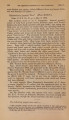
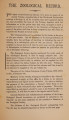
Show 6 7 8 SIR C. ELIOT ON NUDIBRANCHS [June 10, regarded as more primitive than the forms which have developed branchiae and lateral lamellae, or as retrograde. Perhaps the latter hypothesis is more probable. To the five species mentioned in Bergh's ‘ System ' may be added :- 6. PI. waiteri Krause. 7. PI. picteti Andre. 8. PL alba Eliot. 9. PI. pallida Bergh. 10. PI. suluensis Bergh. The family, especially the genus PleurophylUdia, is probably cosmopolitan, being at present recorded from Spitzbergen, the Northern Atlantic, the Mediterranean, Brazil, California, Valparaiso, Honolulu, Japan, China, the Persian Gulf, India, Ceylon, the Malay Archipelago, East Africa, and West Australia. Linguella seems confined to the Indo-Pacific, all the eight species being recorded from Indian, Chinese, and Japanese waters. Pleuroleura has much the same distribution, with the striking exception of P. walteri from Spitzbergen. The coloration is usually sober, but some of the tropical species are rose-coloured, and PleurophylUdia tceniolata is striped with purple and yellow. In all the genera each species has a characteristic dentition, but it may be observed that in many species only a single individual or very few have been examined, so that the radulae may show~ a wider range of variation than is at present known. The arrangement of the teeth is in all cases essentially the same. There is a rhachidian tooth bilaterally symmetrical and bearing several cusps, a somewhat clumsy first lateral which sometimes resembles half the rhachidian tooth, and a varying number (fr om 3 in Pleuroleura picteti to 180 in PleurophylUdia formosa) of subsequent hamate laterals. The species differ chiefly in the amount of denticulation, and all degrees of it are found, from PleurophylUdia natalensis and P. cygnea, in which all the teeth are smooth, to PleurophylUdia undulata, in which they are all denticulate. The various transitional stages can be easily traced, but it is hard to say whether we should regard them as the gradual disappearance of denticles from denticulate teeth or the gradual splitting up and serrulation of smooth teeth. It may be noticed, however, that the radula of such forms as P. cygnea is very like that of Tritonia, and the jaws are similar in the two groups. The buccal parts might therefore be regarded as derived from those of Tritonia ; but otherwise the Pleurophyllidiidae occupy an isolated position, and their peculiar characteristics are probably correlated with burrowing habits, which are known to prevail in some species. It would be interesting to know if their resemblance to the Phyllidiidse, which is merely external, can be explained by any similarity in their manner of life. Of the Newcastle specimens, PleurophylUdia formosa and |