| OCR Text |
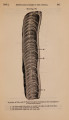
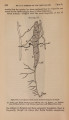
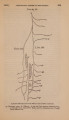
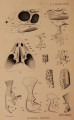
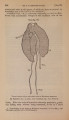
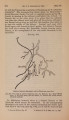
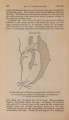
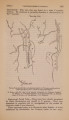
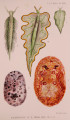
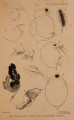
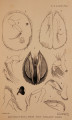
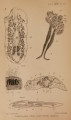
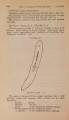
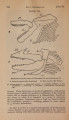
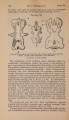
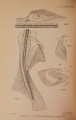
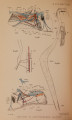
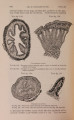
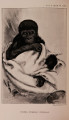
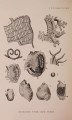
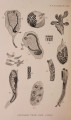
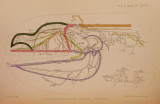
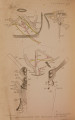
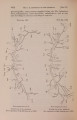
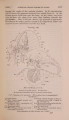
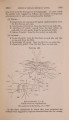
Show 808 MR. W. WOODLAND ON THE [Nov. 27, Tlie spiracular cleft is very large and gill-cleft-like, and lies dorsally at the same distance from the extremity of the snout as the ventrally-situated posterior angles of the mouth. When I received the fish, about one inch or more of the right elongated liver-lobe was protruding through the abdominal pore of the same side, which latter was enlarged to at least six times its normal size (PI. LYII. fig. 1); also on opening the abdominal cavity the entire cardiac portion of the (empty) stomach was found to be thrust up the oesophagus into the buccal cavity, both of which features were due to the sudden release of the animal when brought to the surface from the considerable external pressure under which it normally exists (the pressure due to 500 fathoms of water). The eyes are large, as in many deep-sea fishes. Fig. 2 represents the form of the dermal scutes, which is the same whether the scutes be taken from the dorsal or the ventral surface of the animal. Their form differs somewhat from that represented in the figure of the skin of C. calceus supplied by Gegenbaur. It may also be worth mentioning that the peritoneal lining of the body-cavity was silvery-grey in colour-another characteristic feature of deep-sea fishes. Previous work on the anatomy of this species has been limited, so far as I am able to discover, to the examination of the head-skeleton s and eye-musclesn by Gegenbaur and of the occipito-spinal nerves by Furbringer 10-these two investigators probably having a single specimen at their disposal. Before proceeding to the description of the anatomy of C. calceus, I wish to express my indebtedness to Dr. E. J. Allen, who very kindly acceded to my desire to purchase the fish for anatomical examination when it was brought to the Plymouth Laboratory; to Mr. Boulenger, who readily permitted me to examine numerous specimens of allied Selachians preserved in the British Museum during the course of my enquiries; to Dr. Ridewood, who very kindly read through the manuscript and advised me on several points; and to Professor Minchin and Professor Hickson for several useful suggestions. T h e A l im e n t a r y T ract an d A ssociated G la n d s . So far ns I can gather from a fairly comprehensive survey of the literature relating to the subject, the alimentary tract of C. calceus (PI. LYII. fig. 3) is striking in several respects. In the first place, the pyloric portion of the stomach is, owing to its thick walls, exceedingly stout, is half as long again as the cardiac portion, and was not reflexed so as to lie parallel with this latter and in apposition with it, as is the case e. ij. in the ordinary Scylliwn 8 ‘ Untersucliungen zur vergleichenden Anatomic der Wirbeltliiere.' Leipzig, 1872. (Figs. on plates vi., viii., xii., xvi., and xx. of this work.) o ‘ Vergleichende Anatomie der Wirbeltliiere,' Bd. i. 1898 (fig. 589 on p. 942). 10 " Ueber die Spino-occipitalen Nerven der Selachier und Holocephalen und ilne vergleichende Morphologic " in GegenbaurV Festschrift zum siebenzigsten Geburt-stage,' vol. iii. Leipzig, 1897. |