| OCR Text |
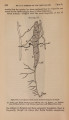
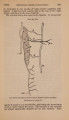
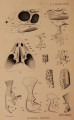
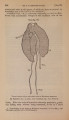
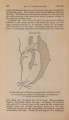
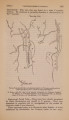
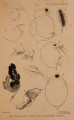
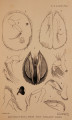
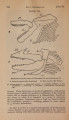
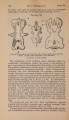
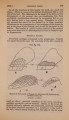
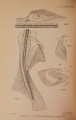
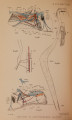
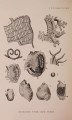
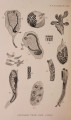
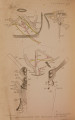
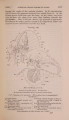
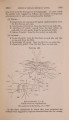
Show 1906.] DIAPTOSAURIAN REPTILE. 595 sufficiently well displayed or preserved to permit of a satisfactory examination. The cervical vertebra are about seven in number, and from the position of the shoulder-girdle we may infer that Ilowesia had a neck of about the same length as the skull. The axis has a large spine almost of mammalian type. Of the other cervical vertebrae, only the zygapopliyses are displayed. There are no dorsal or lumbar vertebrae preserved. There appear to have been two sacral vertebrae, as in Erythrosuchus. Twelve caudal vertebrae are preserved, but not well displayed. The first of these is probably the 3rd caudal. It has well-developed transverse processes and spine. Across the transverse processes it measures 26 mm., and the total height of the vertebra as preserved is 24 mm. There is probably not much of the spine missing. The body is much constricted, as in Phytosaurs, Pelyco-saurs, and most primitive reptiles, and appears to be amphiplatyan or amphicoelian. It is certainly not distinctly notochordal. A well-developed intercentrum lies between this vertebra and the next. The second preserved vertebra (probably 4th) has a small chevron, and the succeeding vertebrae have very long doubleheaded chevrons. In the case of the supposed 5th caudal, the chevron as preserved is 24 mm. long, and in the 6th it is probably even longer. Except in being slightly smaller, the posterior caudals are very similar to the anterior ; they have the same slender transverse processes and similar long chevrons. Shoulder-girdle. Though the shoulder-girdle is rather badly preserved, sufficient remains to show all the principal features. The scapula is comparatively short and moderately flat. Its greatest length is 29 mm. The upper end is 16 mm. wide, and has evidently supported a large cartilaginous suprascapula. The posterior border curves gently and uniformly to the glenoid cavity. The anterior border is badly preserved, there being only indications of the cast. In fig. 10 (PI. XL.) a view is given of the shoulder-girdle as preserved, and in fig. 11a restoration of the whole girdle. The lower end of the scapula is probably 14 mm. wide, and there is no evidence of any notch. The coracoid is very imperfect, but the whole of the anterior half and the glenoid portion are preserved. It has evidently been a large flat rounded bone. There is no coracoid foramen seen in the specimen so far as preserved. Perhaps the foramen was in the cartilage at the anterior and upper corner of the bone. There is no precoracoid. The interclavicle is a slender T -shaped bone, but only a part of the upper end is preserved. The clavicles are long, fairly straight bones which meet each other above the interclavicle. The length of the one which is fully preserved is 23 mm. Humerus. The humerus is in bad preservation, the upper half being represented only by a much weathered impression. The length |