| OCR Text |
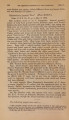
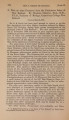
Show 926 MR. G. A. K. MARSHALL OX [Dec. 11, are .also much more oblique, and the scaling is different, being much thinner, with the scales large, round, and white. H i p p o r r h in u s im p r e s s i c o l l i s , sp. nov. Long. 12^, lat. mm. Colour black, moderately shining, and entirely devoid of scaling, except for a small white spot at the extreme apex of the elytra. Head convex, with scattered shallow punctuation ; forehead with two faint longitudinal impressions; anteocular furrows deep. Rostrum about as long as head and prothorax, cut off from head by a dorsal incision; sides parallel to middle, thence gradually dilated to apex ; upper surface convex, with five distinct narrow carina?, the outer one on each side abbreviated apically, the basal margin impressed in the middle and obtusely elevated laterally ; lateral sulci broad and deep, subequal in length, the upper pair only uniting at base ; scrobes very deep, lateral, almost straight; inferior basal furrow very deep. Antennce with scape scarcely reaching eye, the two basal joints of funicle equal. Prothorax a little broader than long, of equal width at base and apex; sides moderately rounded, broadest about middle, dorsal anterior margin truncate; ocular lobes feebly developed; upper surface almost plane, gradually elevated posteriorly and steeply declivous along the basal margin, closely set with low rounded tubercles, leaving a narrow central furrow which, owing to the posterior elevation, appears much deeper towards the base and contains a fine abbreviated carina; tubercles each with a very short depressed dark seta. Elytra elongato-ovate in 3 , shoulders rounded ; sides very slightly ampliated, broadest before middle; apical processes absent; upper surface convex, with shallow sulci containing regular rows of distinct granules; all the intervals evenly raised, convex, with regular rows of depressed and often elongate granules, each bearing a very short depressed dark seta, except on the declivity, where the seta? are long and erect. Legs comparatively long and slender, with scattered dark sete ; posterior tarsi with the 1st joint longest and as broad as 3rd, 2nd rather narrower but as long as 3rd. C a p e C o l o n y : Stellenbosch (Z. Peringney), Malmesbury (R. M. Lightfoot). T y p e in the South African Museum. In general facies this species most resembles II. capensis L., but its rostrum is much more slender and distinctly dilated at the apex; moreover, the gradual posterior elevation of the prothorax and its unusually deep central furrow will distinguish impressicollis from all its nearest allies. H i p p o r r h in u s m o n i l i s , sp. no v . cS long. 10-17, lat. 4-7; § long. 1 1 , lat. 5 mm. Head convex, bare, with scattered large deep punctures; forehead plane and somewhat plicate ; anteocular furrows, as seen from above, very deep. Rostrum a little shorter than protliorax, |