| OCR Text |
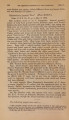
Show 7 0 4 ON CRL'STACEA OF THE NEW ZEALAND LAKES. [J u n e 1 9 , near Dunedin, and from the Bay of Islands, dredged in 8 fathoms. 1 have taken it near the mouth of a little stream at Brighton, in water which was at the time almost fresh to tlie taste, though close to the sea and affected by extra high tides. A m p h i p o d a . P a r a c a l l io p e f l u v ia t il is (G. M. Thomson). Calliope fluviatilis G. M. Thomson, Trans. X. Z. Inst. xi. p. 240. Paracalliope fluviatilis Stebbing, Ann. & Mag. N. H. ser. 7, iv. p. 210. Numerous specimens from Lake Waikare. This species is very common in all freshwater streams in New Zealand ; I have also taken it in perfectly salt-water in Dunedin Harbour and elsewhere. P a r a l e p t am p h o p u s su b t e r r a n e u s (Chilton). Calliope subterranea Chilton, Trans. N. Z. Inst. xiv. p. 177. Calliopius subterraneus Chilton, Trans. Linn. Soc. ser. 2, Zool. vi. p. 234. Paraleptamphopus subterraneus Stebbing, Ann. <fe Mag. Nat. Hist. ser. 7, iv. p. 210. One imperfect specimen from Lake Wakatipu (no depth mentioned), and one from Lake Tapu, taken at a depth of 700 feet. These are both blind, and do not differ appreciably from specimens from the underground waters of the Canterbury Plains. This same blind species has also been taken in surface streams at Castle Hill, Canterbury, at an elevation of 2000 feet above the sea; and more recently Mr. R. M. Laing has brought me specimens from the Longwood Range in Southland. The extension of its distribution as shown by its occurrence in Lakes Tapu and Wakatipu is very interesting. P a r a c o r o p h ium e x c a v a t u m (G. M. Thomson). Corophium excavatum G. M. Thomson, Trans. N. Z. Inst. xvi. p. 236. Paracorophium excavatum, Stebbing, Ann. & Mag. N. H. ser. 7, iii. pp. 241 & 350. Several specimens from Lake Rotoiti, 5 fathoms, and Lake Waikare (netting among reeds). This species was described by Mr. Thomson from specimens obtained from " Brighton Creek (salt-water)." I subsequently took it in Brighton Creek along with Tenagomysis novce-zealandice when the water was almost fresh to the taste, and specimens lived in a small bottle of this water for some months. I have specimens also from brackish water at Napier. It thus appears probable that the last three species are all capable of living m fresh oi* in salt water; and the occurrence of Paracorophium excavatum in freshwater lakes far from the sea |