| OCR Text |
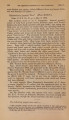
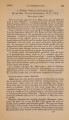
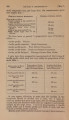
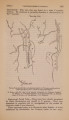
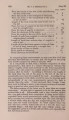
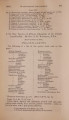
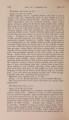
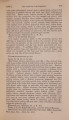
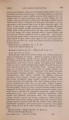
Show 1 0 0 0 SIR C. ELIOT OX THE NUDIBRANCHS [Dec. 11, slides which for some reason (generally the disappearance of the labelled specimen) could not be referred with certainty to a specific name, nor of those (e. g. Madrellci, Phyllobranchus, Kalinga) which if described would add nothing to already published accounts. The slides though very neat are not always of the kind most helpful for studying the details of dentition. Often all the teeth are preserved in situ and none are isolated, so that it is difficult to distinguish the exact form, and especially to see any denticles which may be present on the innermost or outermost teeth. Several rows at least are commonly in confusion, and hence the formulae are given as approximate. A wide rhachis is unusually frequent and may in some cases be the result of artificial stretching. The medium in which the radulae are mounted has in several instances become an opaque gum which impedes investigation, but I have not felt at liberty to remount the objects. But in spite of these difficulties there can be little doubt of the general character of the radulae, and the results obtained from their study may be tabulated as follows:- llexabranchus marginatus (Q. & G.) = Doris gloriosa Kelaart. Chromodoris gleniei (Kelaart). The reference of this form to the genus Chromodoris is confirmed. It is possibly the same as Chr. cava2, and if so the name gleniei has priority. Casella maccarthyi (Kelaart) = C. cincta Bgli. Halgerda apiculatci (A. & H.)=Halgerdapunctata Farran, in all probability. Doris picta Kelaart is probably a Platydoris. Doris exanthemata Kelaart is perhaps Asteronotus hemprichi, and in any case nearly allied to it. But the genitalia are unknown. Discodoris concinna (A. & H.) = Disc, concinniformis Bgh. Staurodoris rusticata (A. & H.). So far as the external characters and buccal parts can decide the matter, the reference of the form to this genus seems certain. Thordisa villosa (A. & H.)= Th. maculigera Bgh. Hervia militaris (A. & H.) = Eolis militaris A. &, Ii. Dons spongiosa and D. tristis are probably referable to the genus Trippct, and the former is perhaps identical with both T. areolata and T. mephitica. But it is not known if either form has ptyaline glands. Some details are given of the buccal parts of Chromodoris zebrina, Platydoris formosa, PI. ellioti, PI. striata, Discodoris fragilis, Disc, pardalis, Goniodoris aspersa, G. citrina, Trevelyana ceylonica, I11 the above statement the first name given is that by which |