| OCR Text |
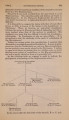
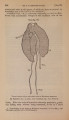
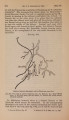
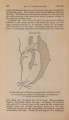
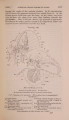
Show 96(5 MRS. O. A. MERRITT I1AWKES ON TI1E [ I ) ( C. 1 1 , appearance of secreting cells. Each tubule ends in a group of ampullary pouches, which are joined with those of the other tubules into a compact mass. Unfortunately, it has not been possible to determine certainly whether the lumen in the poucli-region of each tubule remains distinct, or whether the lumina of this region of the tubules communicate. On the whole, the evidence indicates the former. It is impossible to state the exact homology of these ampullae with those such as are found in, say, Jjcemargus, as the development of both is unknown. But, judging from the work of Coggi, it seems possible that each compound group of ampullae in Chlamydoselachus and in Chimcera is produced by what Coggi (2. p. 295) calls the " stadio di ampolla individualizzata," whilst Lcemargus-like tubules are each produced by the direct development of one of the above " ampolla individualizzata." Hence, from the embryological point of view, each group of compound ampullae in Chlamydoselachus may be regarded as the homologue of a single ampullary tubule such as is found in Lfemargus, &c. D. T h e E y e , E y e -m uscles, an d N erv es. The eye is deeply seated in a socket, the external outline of which has the shape of a biconvex lens. There are both upper and lower eyelids, but no nictitating membrane. The infolding of the skin in both cases is sudden and distinct, that of the lower lid is remarkable for its depth, extending almost to the back of the eye. The infolded membrane both above and below the eye is deeply pigmented, the lower being also provided with tine scales. This pigmentation, which on the under side of the eye is as deep as that of the surface of the body, together with the presence of scales, indicates that the infolded portions become, at times (that is when the eye is protruded), a part of the superficial skin. Those portions of the inner surface of the eyelids which are never evaginated are quite smooth and of a light colour. The eye can easily be protruded, and when in this position does not look outwards but upwards, a position made possible by the large conjunctival fornix, It is known that Chlamydoselachus is a deep-sea fish, in which case an eye which could look upwards would be of the greatest advantage. This protrusible eye no doubt also explains the marked cephalad position of the optic nerve, which is thus placed because the movement is not only upwards but slightly anterior. To keep the eye wTell out in the socket there is an optic stalk or rod of cartilage, common amongst Elasmobranchs (12. p. 25), which also serves here as a base of origin for the recti muscles. The eye-stalk is somewhat more than 1 cm. in length and about 3 mm. in diameter. It is attached to the side of the cranium, near the base, just in front of the trigemino-facialis foramen. The stalk is directed forwards in a, curved line and ends in a flattened, enlarged knob which is applied to the inner |