| OCR Text |
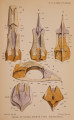
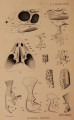
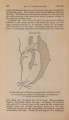
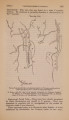
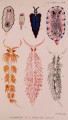
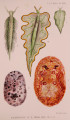
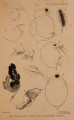
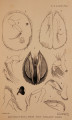
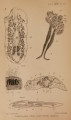
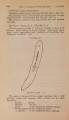
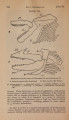
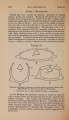
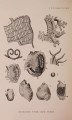
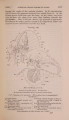
Show 674 SIR C. ELIOT ON NUDIBRANCHS [ J line 19, this form are, when alive, glossy black with slate-blue ridges and orange tubercles on the back. Bergh (Siboga, p. 180) observes that the genus Ceratophyllidia Eliot u ist wolil mit der Phyllidiopsis identisch." It is not denied that the mouth-parts are as in Phyllidiopsis, but the back is studded with papillae which consist of soft globes mounted on flexible stalks which shake when the animal moves. They seem to me strikingly different from the flat hard tubercles of the other Pliyllidiidae, and to constitute a sufficient generic character. PnYLLiDiA z e y l a n ic a Kelaart. (Plate XLII. fig. 10.) (Kelaart, 1. c. II. p. 494.) Bergh (System, p. 1120, and elsewhere) regards this species as equivalent to Phyllidia varicosa, but the identification offers many difficulties. The rhinophores and oral tentacles are said to be black, whereas in Ph. varicosa they are yellow. The foot is whitish, whereas in Ph. varicosa it is blackish or purplish with a deep black median line. Also the general arrangement of the dorsal pattern is not the same. It cannot be said that in Ph. varicosa " three continuous black lines run round the whole length" of the back. The form seems to have greater affinities to Ph. rosans, but here also differences of shape and colour present themselves, for among other points Ph. zeylanica is more distinctly tuberculate. It must, I think, be regarded provisionally as a separate species. B o rn ella d ig it a t a Ad. & Reeve. (= B . hancockana Kelaart, 1. c. III. p. 269.) Among the drawings are two labelled " Bornella digitaia " and " Dendronotus vel Bornella HancocJcii" both containing figures of the entire animal and of the rhinophores and papillae separately. In both there are five pairs of papillae behind the rhinophores, and no difference is discernible except that in B. digitata the rhino-phorial papillae have five branches and the others three, wdiereas all five are represented as having four branches in B. hancockii. But even this difference is not observed in the figures of the entire animals. The two names are clearly synonyms. S CY L L ^ E I D JE. The family contains two genera: Scyllcea L. and Crosslandia Eliot. The latter is closely allied to Scyllcea in structure but differs in appearance, since the dorsal margin instead of bearing two large papillae on either side, is expanded into a single wing-like flap. ° & Like other genera of pelagic, or semipelagic, nudibranchs, such as Glaucus, Phylliroe, and llexabranchus, Scyllcea presents numerous varieties differing in colour and external details, among which it is extremely hard to find valid specific characters. Also |