| OCR Text |
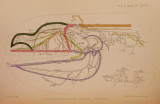
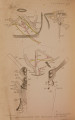
Show 6 2 2 MR. F. E. BEDDARD ON THE [May 29, anterior abdominal takes place almost exactly on tlie middle of the stomach, as also in an example of Alligator mississippiensis with which I have been able to compare this Caiman. Moreover, in both Alligators the right branch received a twig from the stomach which underlay (when the reptiles were examined in the usual position of dissection) the left division of the left anterior abdominal. The same branching is described by Jacquart in the " Caiman & museau de brochet," but the details seem a little different. The material does not at present exist for a comparison of the different genera of the Crocodilia, and for a classification based upon the entire structure of these reptiles. It is in the meantime interesting to note-though it is obviously premature to found any generalisation upon the facts-that the West African Osteolcemus does show certain points of likeness to the American Crocodilia in respect of some of the veins that have been dealt with in the foregoing pages. In Alligator, as shown by Jacquart's figure of Alligator lucius *, and by my own observations, which I take the opportunity of recording in the present communication, upon A. mississippiensis, the two anterior abdominal veins are not connected by an obliquely running commissure f . The same vein is also absent or at least modified in Caiman sclerops. On the other hand, as I have shown, certain species of the genus Crocodilus possess it. Now this connecting vein is absent or at least modified in Osteolcemus. Again, the latter genus has the two azygos veins exposed superficially along their course, while in Crocodilus the same veins are for the most part entirely buried under the musculature. In this particular also Osteolcemus agrees with the species of Alligator which I have referred to in the foregoing pages, viz. Alligator mississippiensis. Dorsal and Lateral Parieto-hepatic Veins.-These veins, termed by Rathke venas vertebralis postremse, really consist, as was not noted by him, of veins arising from two sources. There are veins connected with the vena vertebralis posterior or azygos, on each side, or, if the latter be not visible superficially, emerging from the parietes close to the vertebral column, and there are trunks of more lateral origin from the parietes. Save for the Varanidae +, this double origin of the dorsal parietal affluents of the hepatic portal system is not found among the Lacertilia, or at least has not been as yet recorded, and certainly does not exist in many forms. The presence of the lateral parieto-hepatic affluent is accompanied in both the Crocodilia and the Varan idse by the development of a longitudinally running lateral parietal vein, which, though represented in the Lacertilia, is not so important in them. I have already given some account of these veins in Crocodilus acutus §. I am now able to give further details of this system in the Crocodilia from the examination of other species. * Ann. Sci. Nat. loc. cit. pi. 3. fig. 1. f It is noteworthy that in both All. mississippiensis and Caiman sclerops the left vein is nearer to the middle line than the right vein. X Supra, p. 616. § P. Z. S. 1905, vol. ii. p. 466. |