| OCR Text |
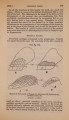
Show 1 9 0 6 . ] OF SOUTHERN INDIA AND CEYLON. 6 5 9 excrescences, from which spicules project here and there. But in all three specimens there are several bald spaces on either side, not connected, but arranged in a more or less continuous line from the rhinophores to the branchial pocket. The integuments are stiff, but not harsh to the touch. They are full of rod-like spicules, straight or slightly curved but not branched, set in an irregular stellate pattern which is not conspicuous. They form columns under the tubercles. The rhinophores are dark grey. The pockets open in hillocks covered with tubercles like the rest of the back, but not protected by special valves. The branchiae are also grey, five or six in number and mostly bipinnate, but tripin nate in places. The margin of the pocket is hardly raised, undulated, but not stellate and not protected by tubercles. The mantle-margin is fairly wide. The anterior margin of the foot has a shallow groove and a rather distinct notch in the middle. The oral tentacles are white, digitate, and tapering ; small, but quite distinct. The blood-gland is tlocculent and pinkish. The central nervous system is enclosed in a strong capsule and is granulate. The ganglia touch one another. The pedal ganglia are round; the cerebro-pleural are separated into two divisions with moderate distinctness. Under the oesophagus passes the strong, broad, short, common commissure. Mr. Farran found both salivary and ptyaline glands on the buccal mass, and I also found at least two sets of glandular organs. Two glands open into the oesophagus close to the central nervous system ; they are band-like and granulate, with long thin ducts. Two other glands, apparently connected with the buccal mass, are large, white, opaque, flocculent, but compact. I could not discover where they open. Close to the mouth I found a gland-like bladder containing irregularly-shaped spicules. No labial armature was found. The yellow radula consists of 38 rows, two of which are undeveloped and shadowy. The lateral teeth are 39, as in Mr. Farran's specimen, and the number seems remarkably constant. The 10 innermost are smaller than the rest, rather straight, and bear a single minute denticle, sometimes connected with a ridge, on the outer side. In the middle of the half row the teeth are larger and more distinctly hamate. The two or three outermost are small and bear hair-like denticles. The stomach is rather large and not enclosed in the liver; under it lies a rather large, white, pear-shaped gall-bladder. The liver is greenish internally; externally it is covered by a thick white layer of the hermaphrodite gland. The genitalia are unarmed. Both the spermatothecas are pinkish and globular, but one is three times as large as the other. Generically this form seems to me referable to Trippa rather than to Thordisa. Both Mr. Farran and myself found ptyaline glands, which are regarded as characteristic of the genus. The back is covered with prominences which are often compound. The bald patches perhaps correspond to the pits found in other |