| OCR Text |
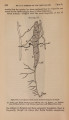
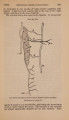
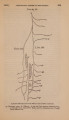
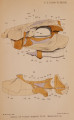
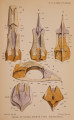
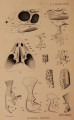
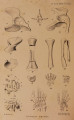
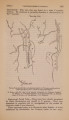
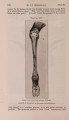
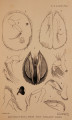
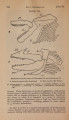
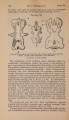
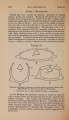
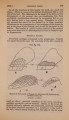
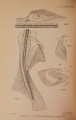
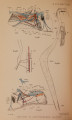
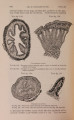
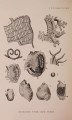
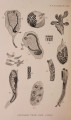
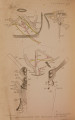
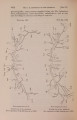
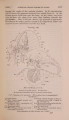
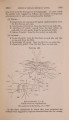
Show 1 9 0 6 .] DIAPTOSAURIAN REPTILE. 5 9 7 to have been covered by cartilage. Whether this cartilage has only been a narrow border round the front of the bone, or a well-developed prepubic cartilage, the evidence does not conclusively show. About the middle of the outer side of the pubis is a well-marked bony process. There is a large pubic foramen in the bone near its posterior and upper corner. The greatest length of the pubis is 25 mm., and the greatest breadth 19 mm. In fig. 15 (PI. XLI.) is shown a side view of the pelvis slightly restored as regards the acetabulum. All the bones are shown in what is believed to be true side view. In fig. 16 there is given for comparison a view of the pelvis of the large South- African Phytosaur Erythrosuchus. Here the pubis and ischium are also of the plate-like type, but the modification is carried further than in Howesia. The pubis is bent down still further and the lower part stouter. The symphysial portions of both pubis and ischium are directed more inwards. Fig. 18 shows the left pubis as viewed from below and slightly from behind and the outer side. Femur. Portions of both femora are preserved, and both the upper and lower ends of the left are in good condition. The bone is slightly curved downwards towards its lower end, as is the case in the femur of the Crocodile. Both ends have been largely cartilaginous. PI. XLI. fig. 20 represents the appearance of the proximal end. There is a large trochanter which has probably been devoid of cartilage, and a large, flat, semicircular surface which has supported the cartilaginous head. The lower end of the bone is broad and powerful, and has doubtless had large cartilaginous condyles. Tibia and Fibula. The left tibia is practically complete, but the lower third is slightly displaced, owing to a fracture which occurred during the animal's life and united with the fragments in a slightly false position. The bone is much expanded at the proximal end, which has a rounded upper surface and had probably little cartilage on it. Its greatest width is 16 mm. The bone is much constricted in the middle, measuring only 5 mm. across. The lower end is not much expanded, and probably had a well-developed pad of cartilage. The total length of the bone is 50 mm. The fibula is slender in the middle and considerably expanded at both ends. It has a slight double curve. It is probably a little shorter than the tibia. In fig. 21a view is given of the front of the tibia restored so far as the correction of the slight displacement of the lower fragment. Fig. 22 show's the tibia and fibula as preserved in the specimen. Fes, A considerable portion of the right foot is preserved, and though some of the bones are displaced it is possible to make a fairly satisfactory restoration of both the tarsus and metatarsus. |