| OCR Text |
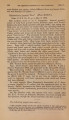
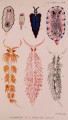
Show G68 SIR C. ELIOT ON NUDIBRANCHS [June 19, The two genera are clearly distinguished. Externally the chief difference is that Trevelyana has numerous small branchiae and Nembrotha a few (3-5) large branchiae. In Trevelyana the radula is fairly wide ; the rhachis bare; the teeth are awl-shaped or slightly hamate, and though the innermost is generally distinguished from the rest, it is not of an essentially different shape. In Nembrotha, on the other hand, the radula is narrow; there is a rhachidian tooth; the first lateral is large and falciform, the rest are mere plates. Also, whereas in Nembrotha the hermaphrodite gland is spread over the liver, as is usual in the Dorididae, in Trevelyana it is quite separate from the liver and forms two globular masses in front of it. This arrangement is very rare in the Dorididae and is characteristic of such forms as Scyllcea, Bornella, &c. It might be supposed that it would not occur in a Doridiform animal without being accompanied by other profound structural modifications; but it is found not only in Bathydoris, but also in Alloiodoris, which, but for this peculiarity, seems to be a perfectly ordinary Dor id. It will thus be clear that it is not easy to see how Trevelyana can be derived from Nembrotha or vice versa. Nembrotha may be regarded as an animal analogous to Triopa which has lost its appendages, though the dentition is not exactly the same. But Trevelyana cannot be so explained. In its dentition, though not in other respects, it shows greater resemblance to Notodoris. About nine species of Trevelyana seem fairly certain :- 1. T. ceylonica Kelaart. - T. rubromaculata Bergh. = T. picta Pse. ? = Boris impudica Rupp. Leuck. 2. T. bicolor A. & H. 3. T. citrina B. 4. T. alba B. 5. T. inornata B. 6. T. plebeia B. 7. T. crocea B. r 8. t . coccinea Eliot. [9. T. rubropapulosa B. Bergh in his 1 System,' p. 1144, includes in his list Trev. ? rubra Pease, but in the Opistliobranchs of the 1 Siboga ' has inadvertently registered a form under the same name as a new species. The specimen was, however, small, and its state of preservation rendered a full description impossible. It may be the same as T. rubra Pse., which is very incompletely described. T. concinna Abraham, of which nothing is known except the external features of an alcoholic specimen, does not seem to me sufficiently characterised. The remarkable Tr. ? defensa described by Bergh (Siboga, pp. 192-3) must, I think, be regarded as a new genus if not a |