| OCR Text |
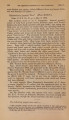
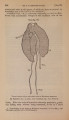
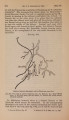
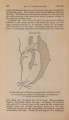
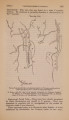
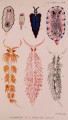
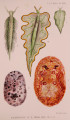
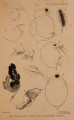
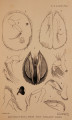
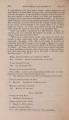
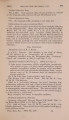
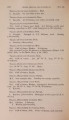
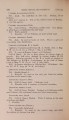
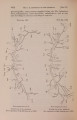
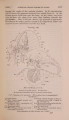
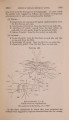
Show C84 SIR C. ELIOT ON NUDIBRANCHS [June 19, L in g u e l l a f a l l a x (?) Bergh. (Bergh, " Beitr. zur Kenntniss (ler japanischen Nudi-branchien," Verh. k.-k. zool.-bot. Ges. in Wien, xxx. 1880, pp. 177-180.) Three specimens are possibly referable to this form. Considering their age they are well preserved. The dorsal surface, gills, side-lamellae, and foot are all brownish pink ; the mantle, foot, and tentacular shield are bordered with yellow, and the rhinophores are tipped with the same colour; the dorsal surface bears 15-20 yellow longitudinal stripes, with indications that there were narrower stripes between them which have disappeared. Under the lens it is seen that some of the stripes are composed of a series of minute yellow rings. The largest specimen is about 40 mm. long (but much bent) and 16 broad. The dorsal surface is smooth, except that some of the stripes are distinctly raised, and is continuous with the smooth tentacular shield, which is not very wide and not much produced at the ends. The central dorsal stripe passes between the rhinophores and beyond. The gill is a tightly-packed collection of lamellae, which lie not in a cleft, but between the body-wall and the mantle-edge. Immediately behind the gill there is in all the specimens a large lobe (as much as 5 mm. x 3 mm.), and in one there is a smaller accessory lobe on the left side. The side-lamellae are numerous and thick, not so well preserved as the rest of the animal, but seemingly fan-shaped. The largest is 4 mm. long and 2 mm. broad at the tip, but narrower at the base. The penis projects in front of the gill. It is about 5 mm. long, cylindrical, slender, and unarmed. No cnidopores were found. The jaws are yellow, not very strong, with 6-8 rows of mosaic-like denticles. In the two specimens opened, the radula consisted of 55 and 60 rows of teeth respectively. In the smaller radula the number of laterals did not exceed 17 or 18, in the larger it rose to 21. The rhachidian tooth is very broad, and bears 10 denticles on each side of the central cusp. The first lateral does not overlap it much, and is not very markedly different from the succeeding teeth, though stouter and more hamate. The first four laterals bear eight denticles. The rest are smooth and erect, but the fifth sometimes bears one or two denticles. After the fifth no denticles were seen. In most of their external characters and in their buccal parts these specimens agree with L. fallax, described by Bergh from a single specimen found at Enosima, Japan. Bergh, however, mentions no dorsal stripes, and it is remarkable that they should have disappeared in a comparatively recent specimen and lasted so long in those kept at Newcastle. Also, although the radula is essentially the same as that described by Bergh, the central tooth is wider than in his figure. The identification must therefore remain somewhat doubtful until more Indian and Japanese specimens can be compared. |